In our quest to find more mills for a sequel to our first mill book, “Milling Around: Exploring 26 Mills in the Missouri Ozarks,” my husband and I happened upon Whinrey, formerly known as the Caplinger, Mill. It is located in the town of Caplinger Mills, in Cedar County, and is the reason the area developed to become prominent.
Whinrey Mill History
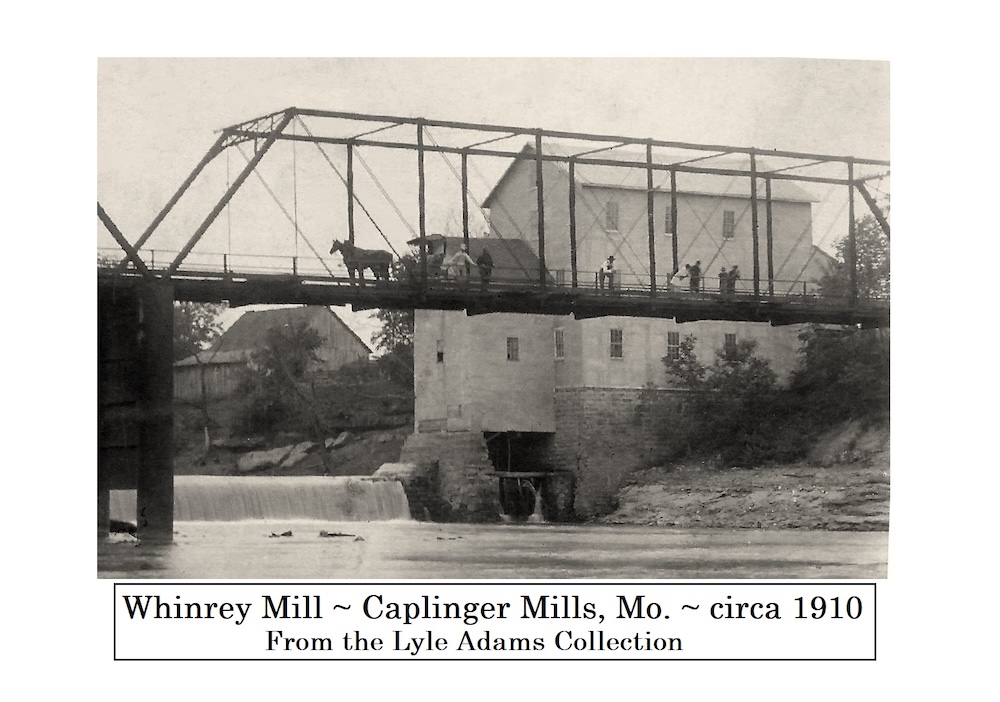
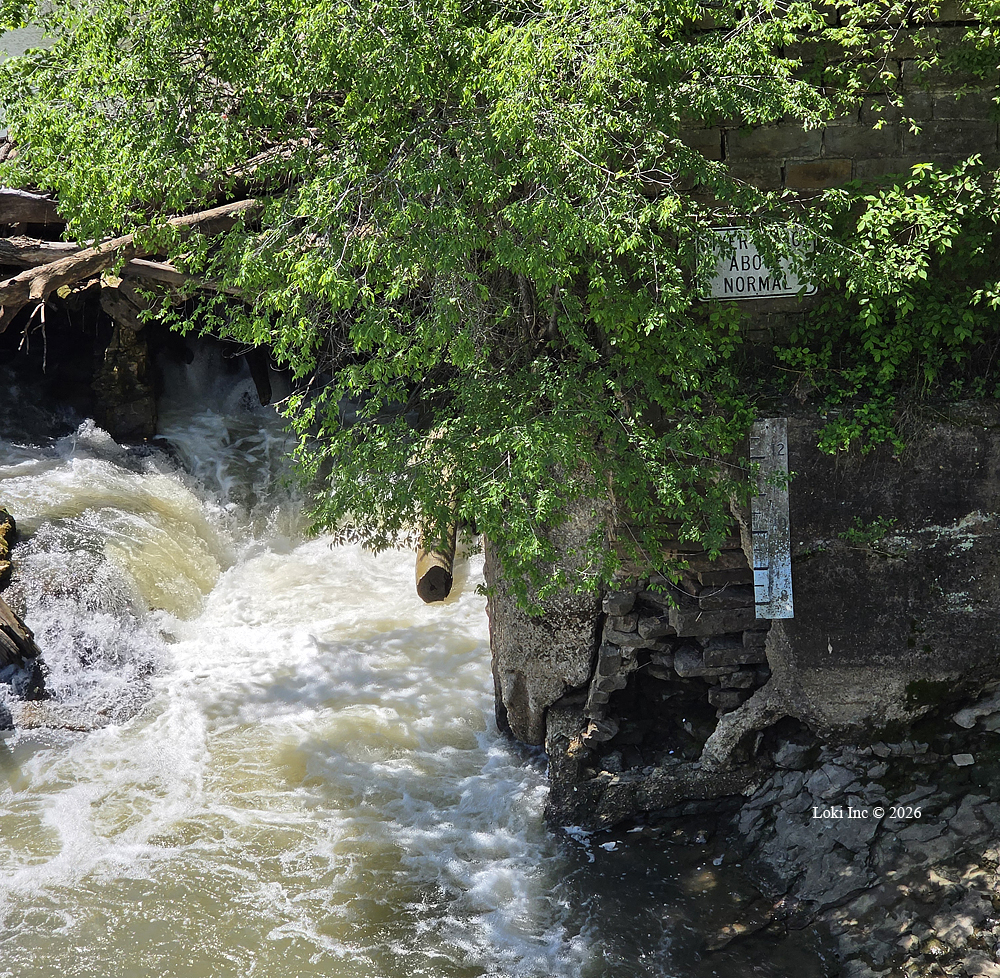
You’ll have to use your imagination and the photo above to see what the mill once looked like at this site on the Sac River. All that now stands is the foundation. As with most mills from the 19th century, someone had a vision of harnessing power produced by water to produce a product. Cedar County was incorporated in 1845, but in 1837 John Williams and his family moved from Miller County to the area, settling in the Cedar Creek valley which lies three miles west of the Sac River. They built Cedar Mill, a water-powered grist mill, on Cedar Creek. The mill lasted two years before being destroyed by a flood.
Williams decided to rebuild the mill and found a place three miles east on the west end of a limestone ledge overlooking the Sac River. He transported the remaining machinery from Cedar Mill to the new build site. In 1842, when the mill build had almost neared completion, either two or three Caplingers from Tennessee purchased the mill. By 1843 the Caplingers had moved onto the site, and they began to enlarge what Williams had originally built.
How a Mill Ran Back Then
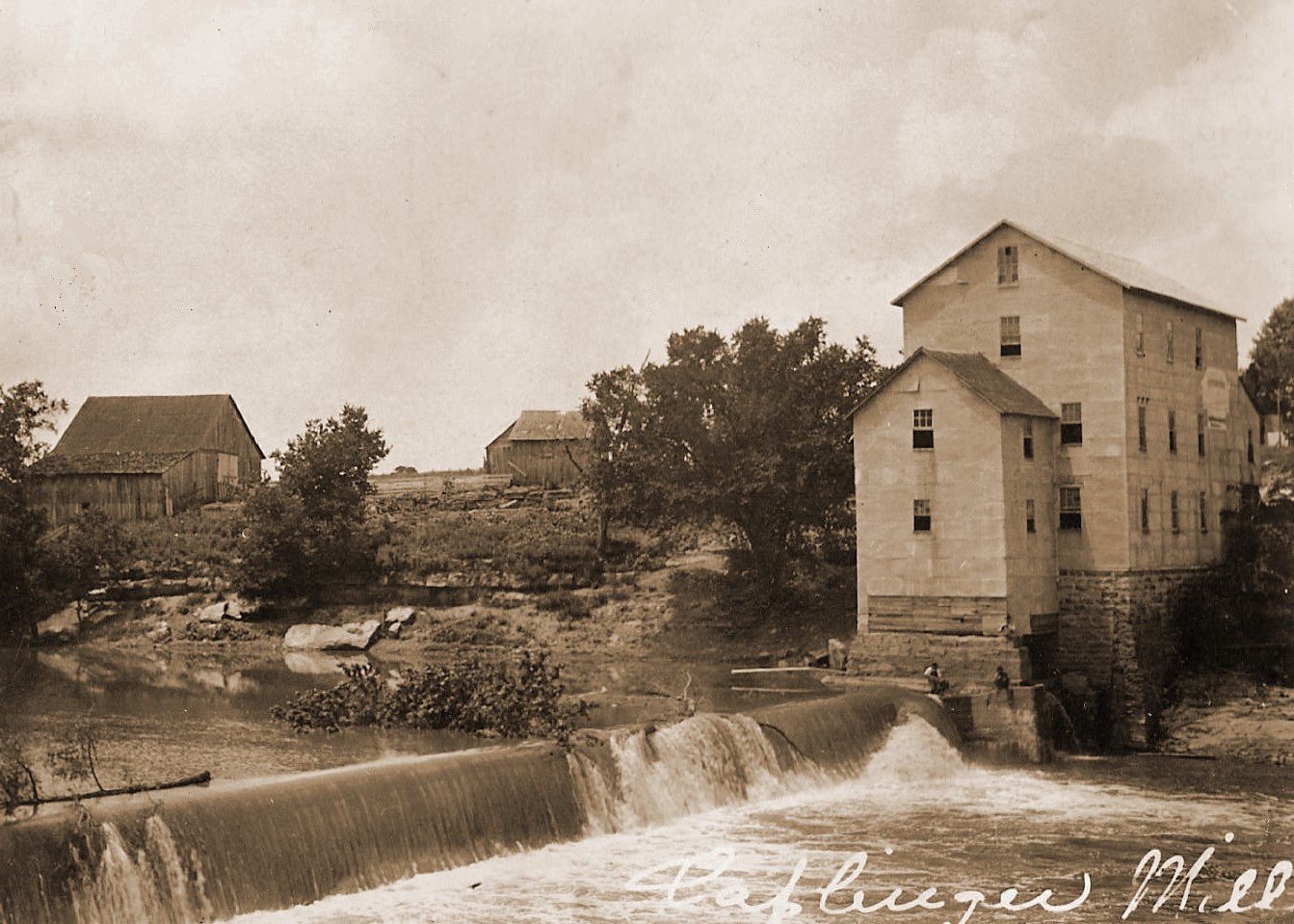
It is believed that Caplinger’s Mill was the first water-powered grist mill in the county after it was incorporated, and commanded a huge presence within the fast-growing community. The helpful booklet, “Caplinger Mills Historic District,” says not only did a grist mill provide a place for people to have grain ground, but mentions that it also stored surplus grain to sell. If you take a look at what the miller of Topaz, Joe Bob O’Neal, had to say about milling practices, “You just harvest wheat one time a year. You can’t have all that made into flour at the same time because in the first place you don’t have any place to store that at home, in your cabin or homestead and in the second place, it would go rancid. So, the farmer would bring his wheat in, and say however much he wanted. The miller would make so much flour and divert the wheat from going to the roller mills into a grain storage bin. There were wagon scales out here in the barn lot, so the miller could weigh your full wagon and your empty wagon, so he knew how much wheat you had. So, when you ran out of flour in three months or so, he would take so much wheat out of that bin and turn that into flour for you. Some of that chuting left in the mill that goes to my third floor goes into that grain bill. That’s why that was there.”
Caplinger Mill: The Civil War Years and Beyond
In 1847, four years after the Caplingers moved onto the site, people started planning for a school in the area. Two Caplinger brothers, Thomas and James, assumed operation of the mill from their father sometime before the start of the Civil War. Thomas died on the battlefield during the Battle of Wilson’s Creek. In 1863, Shelby’s Raiders burned the mill.
After the Civil War, Andrew Masters – who was the step-father-in-law to Thomas Caplinger – purchased the mill ruins on the steps of the courthouse and changed the name to Master’s Mill. He and his partner, J.P. Tracy, rebuilt the mill, and in May 1868, they obtained permission to construct a 10-foot dam made of logs nearby. In August, flooding of the Sac River lifted the 40-foot long and 6-foot-wide wall and carried it away, along with a new frame for a saw mill. Masters died in 1869. Meanwhile, in 1870, a plat appeared with the name Sacville on it. Thus, the mill became incorporated and its name changed to the Sacville Flowering and Sawmill Association.
Caplinger Name Changed to Whinrey
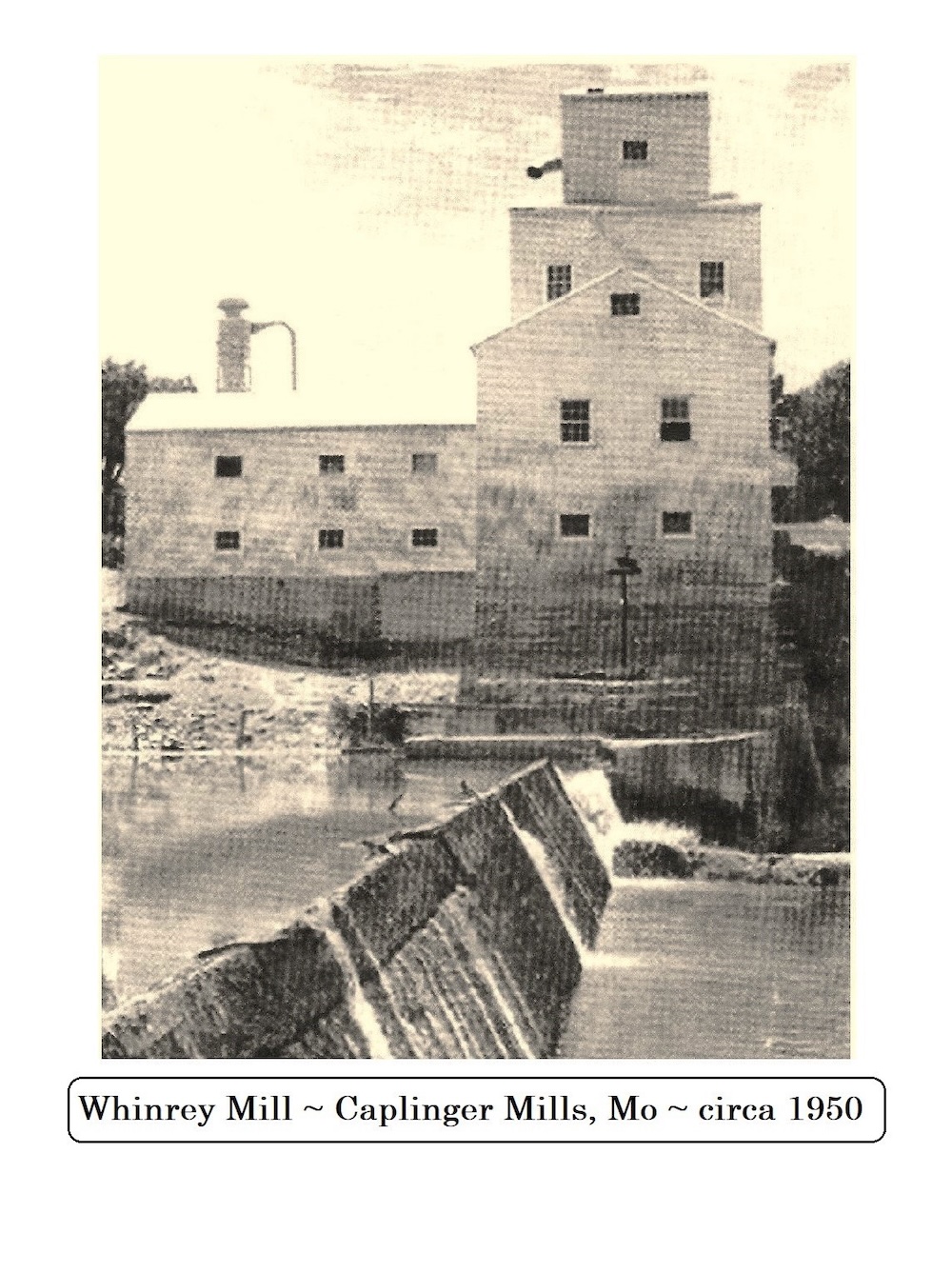
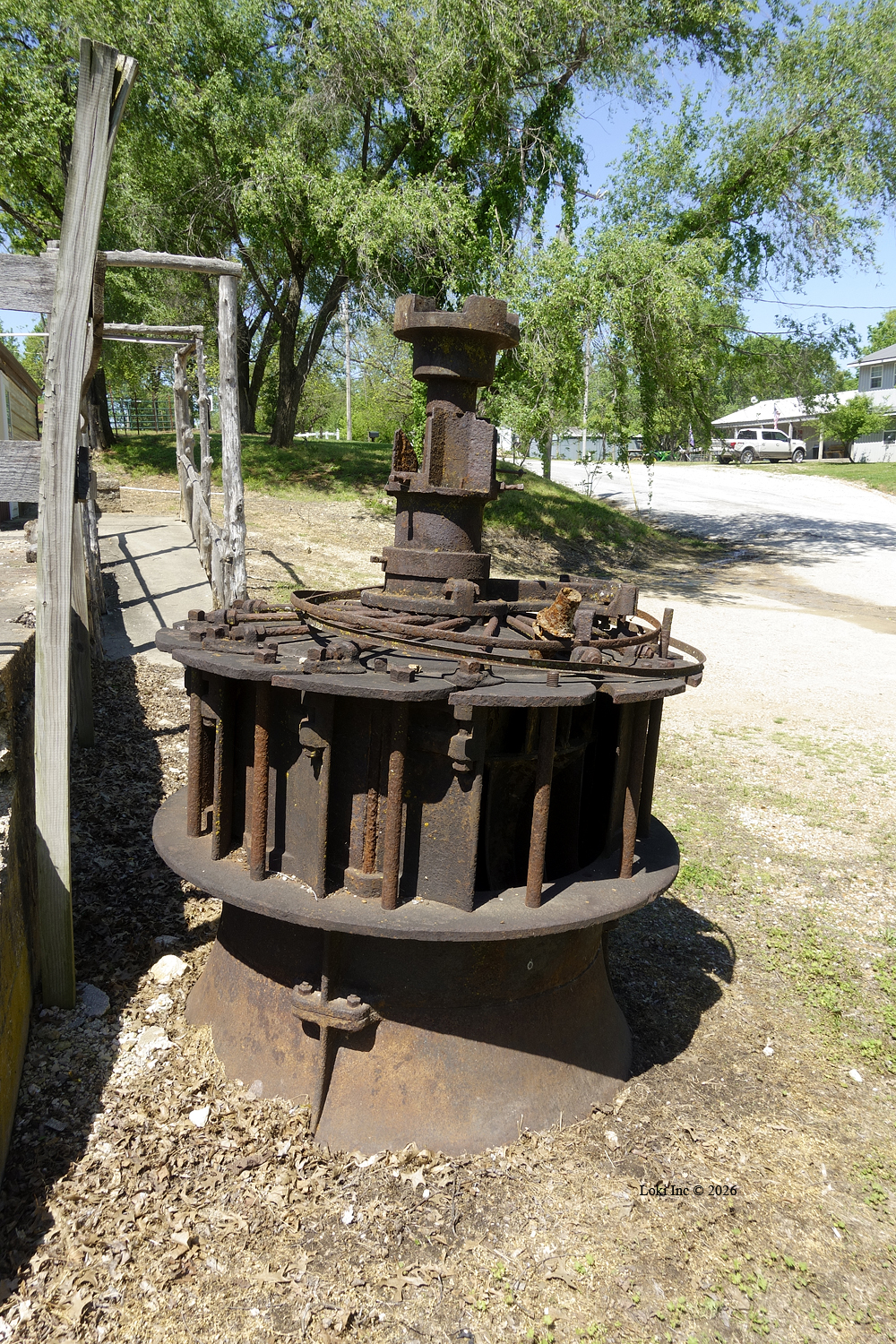
In 1893, W. A. (Bunk) Whinrey became partners with Joseph Whinrey and George Likens to purchase the mill. They began improvements immediately, including upgrading the dam. They also added the present-day stone foundation, and put a larger mill on top. They replaced the primitive stone buhrs with more modern roller milling equipment and powered it with a 45-inch Leffel turbine.
Sometime around the turn of the 19th century, Sacville became Caplinger Mills – in honor of the work and industry of the Caplingers.
Eventually, Bunk Whinrey became the sole owner and in 1911 began the arduous process of replacing the wooden dam that stretched across the river. That meant Whinrey and his helper, Jimmie Boyden, would wait until August when the river was low, and hire help to build forms for the new dam, one wheelbarrow at a time. It is said that during when the river runs low, you might be able to observe the individual concrete pours from days gone by. Whinrey renamed the mill W.A.Whinrey and Son Milling Co.
Because of the improved dam, Whinrey’s mill could produce more power. He decided to sell it as electricity and hired a Kansas City electrical engineer to design the system. According to the aforementioned booklet, “The dynamo was placed in a shed built above the turbine and it was operated by a huge belt, driven from a split wheel bolted onto the horizontal line shaft from the turbine. There was an auxiliary steam-powered generator in Humansville to provide backup power when necessary.”
By 1917, the mill sold power to the nearby towns of Caplinger Mills, Humansville and Flemington. Whinrey had signed a lease with William Mathis, of the Ozarks Utility Co., to provide electricity and also, a telephone line on the electric poles. He kept the power rights to his mill and would only use the steam boiler when the water power failed.
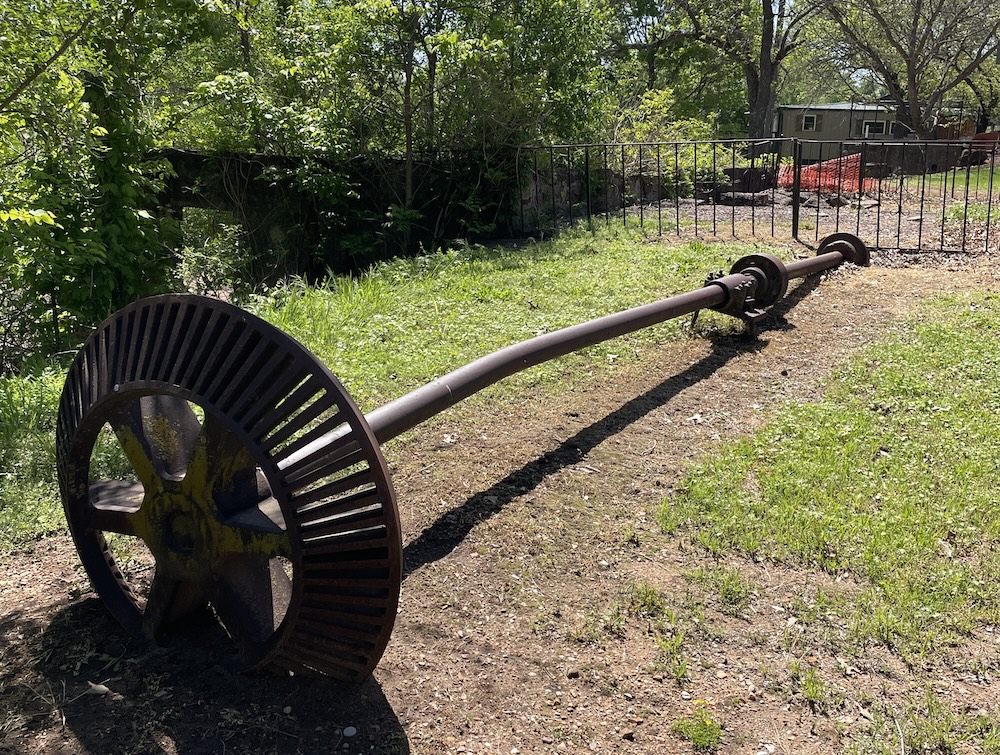
Whinrey then decided to raise the dam by another two feet, which meant some workmen sat on the dam, chopping moss off the existing structure, before pouring more concrete on top. Shortly after that feat was completed, Mother Nature struck again – sending enough high water in 1919 to wash around the east end of the dam and damage the dam and the Caplinger Mill Bridge (erected in 1895). Whinrey sold the power rights and dam to L.K. Green, Ozarks Utility Co. Green built a powerhouse at the east end of the dam, and sold power to several counties and to the mill.
In 1931, Whinrey’s son, Loyd, took over day-to-day operations of the mill. It burned in 1947. Loyd employed the aid of his sister, Maybell and her husband and rebuilt the mill afterward, but it burned down again in 1953. Maybell said kids nearby had been playing with firecrackers and started the fire; another reason could have been, according to “Caplinger Mills, Missouri Lyceum Series, Second Edition,” some believed that the flammable flour dust in the mill was ignited by faulty wiring. Loyd did not rebuild for the third time, and went on to be elected as the county collector.
Today in Caplinger Mills
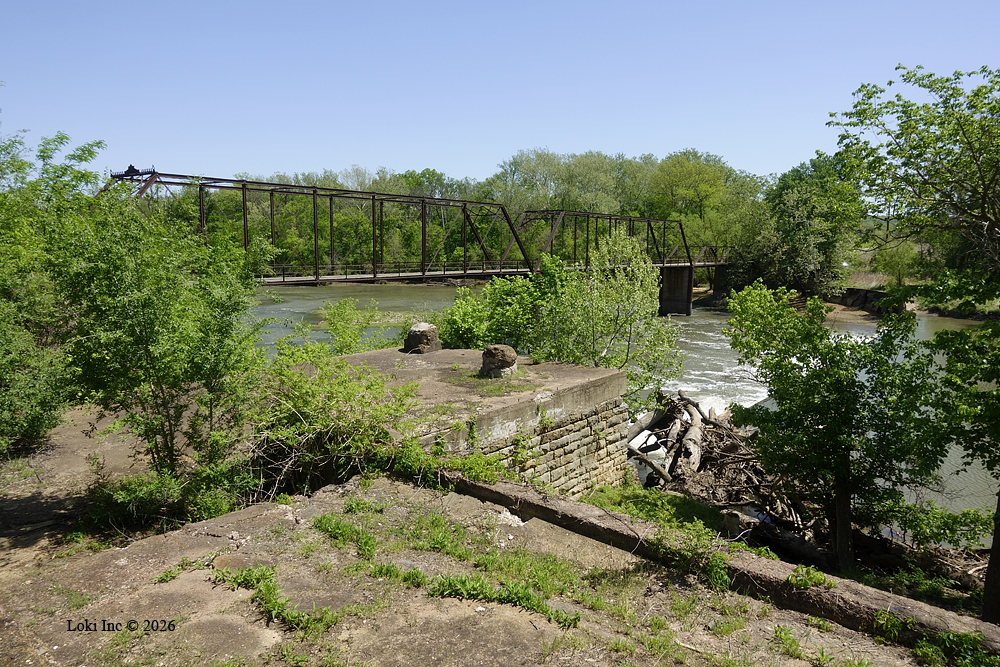
According to the booklet “Caplinger Mills Historic District,” the mill site also provided a wonderful place for recreation in the river. Indeed, when we visited the site, a few men (retired, no doubt) enjoyed casting some fishing lines off the bridge. The book stated, “A secondary offshoot of the milling industry was the recreation provided by the waters impounded behind and rushing over the dam. This created a regionally famous resort and fishing environment … Many people brought grain to the mill simply as an excuse to spend some time fishing in the river or eating the renowned meals at the local hotel.”
Two resorts lie near the ruins of the mill, and people may still walk across the Caplinger Mills Bridge and enjoy the views and maybe, try to imagine what a bustling place it must have once been.
I would like to give a special thank you to Judy Nichols, president of the Cedar County Historical Society, who not only responded to my questions about the mill and bridge, but who also invited me to join the Society (which I did) and sent me literature regarding the history of Cedar County. I look forward to spending more time in this lovely area of the Ozarks in the future.