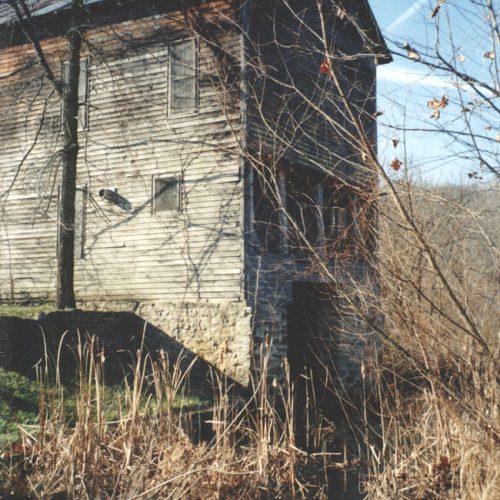
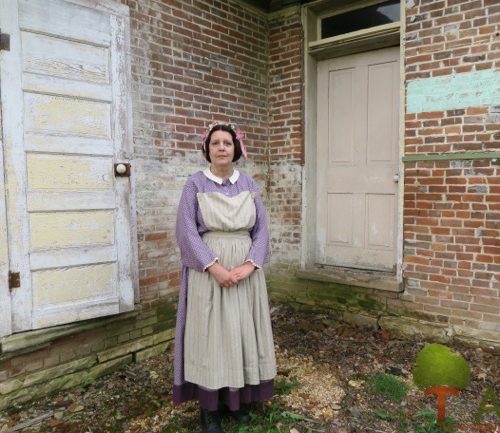
Two years ago, I published “Milling Around: Exploring 26 Mills in the Missouri Ozarks”, a book about some of the (mainly) water mills that made a great impact on my region’s history and commerce. In my quest to find more mills for a second book, I often run across other interesting historical structures, such as bridges. Throughout the years, I’ve discovered that Missouri boasts several bridges built in the late 1800s that have not faded into history. One bridge, the Caplinger Mills Bridge, spans the Sac River in Cedar County, near Caplinger Mills.
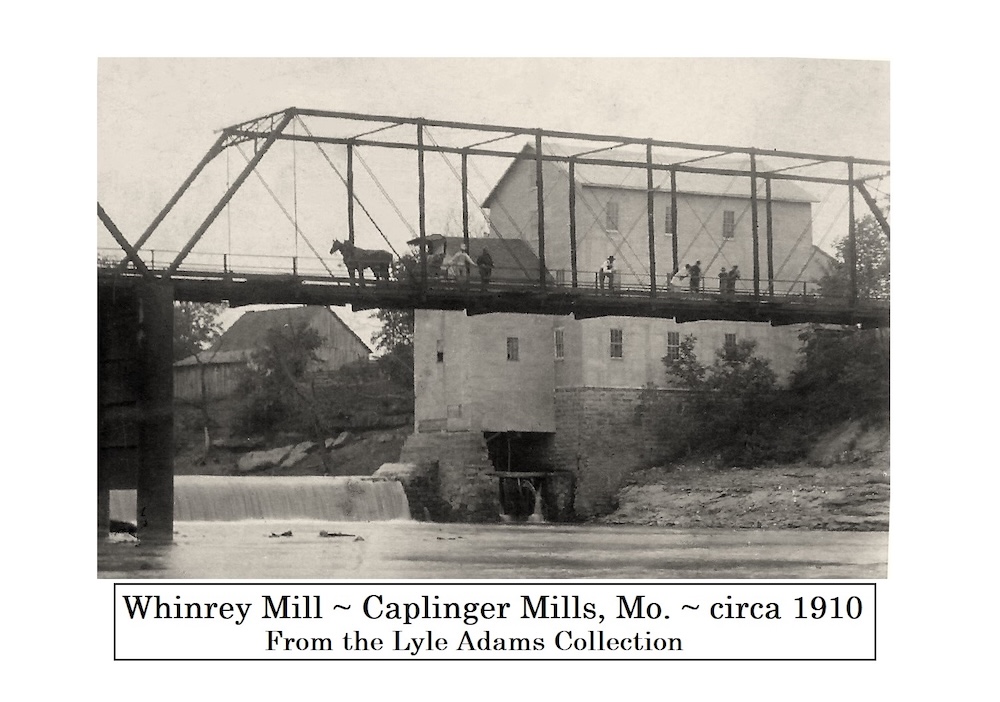
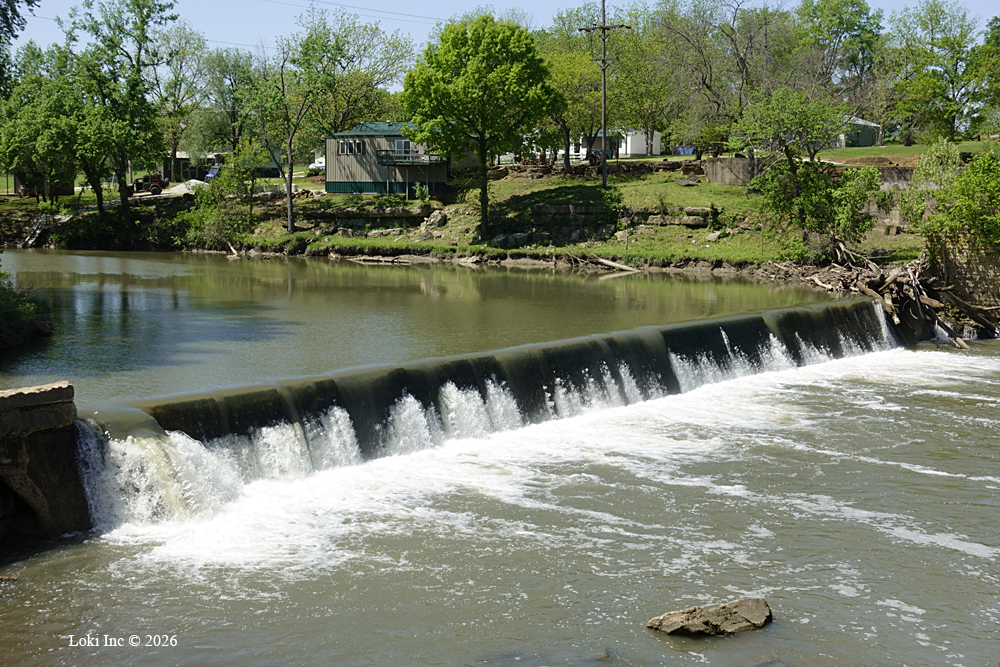
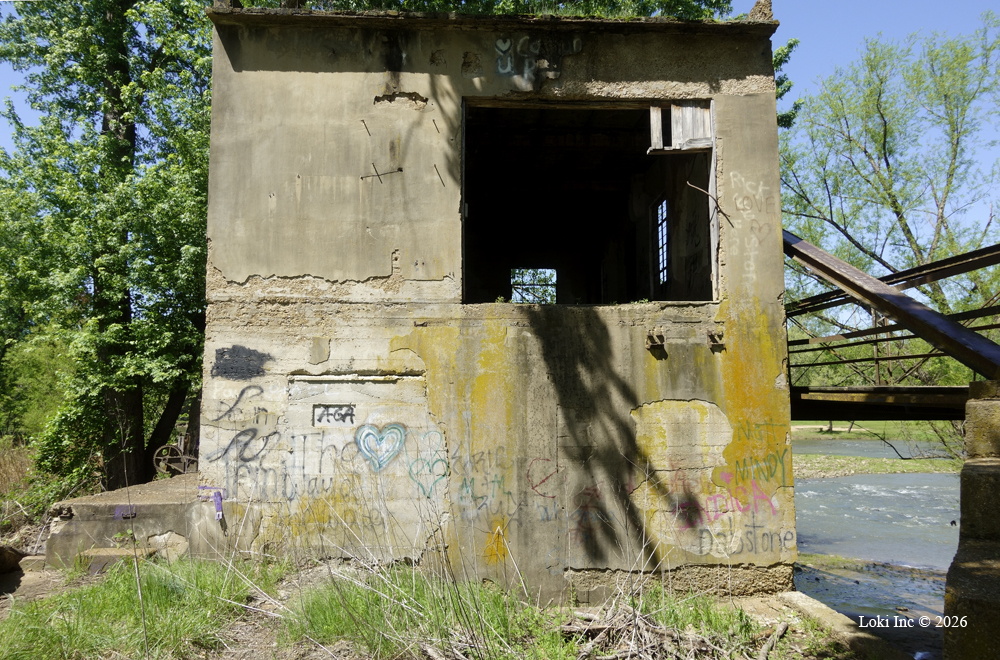
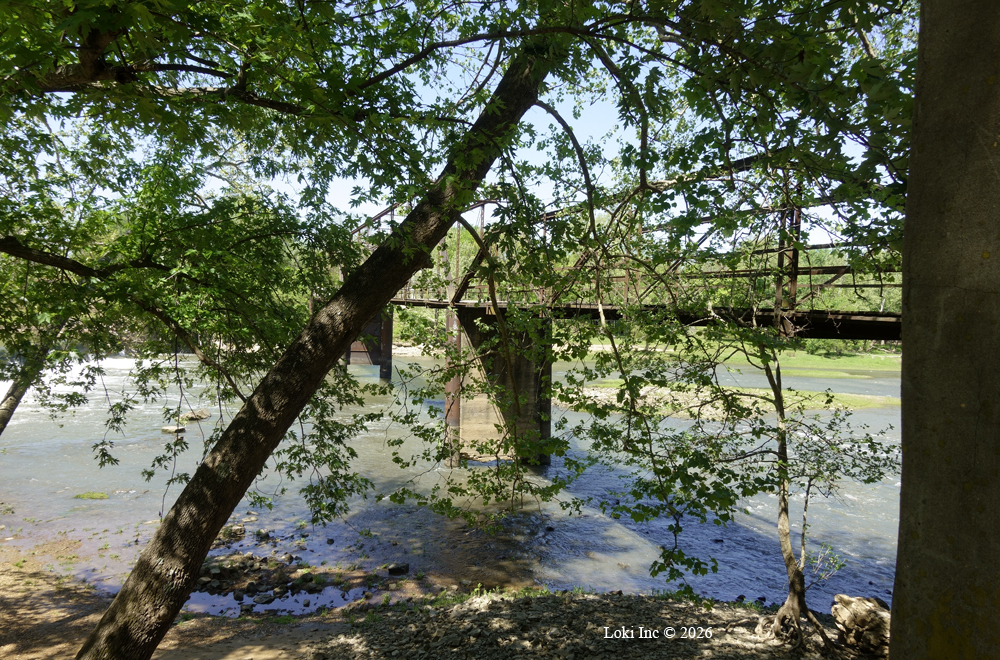
My husband often accompanies me and takes many of the photos that supplement the accounts I publish about my travels, and he went along on this trip. Although we went to see the remains of the Caplinger Mill, we spent more time exploring the bridge and its associated powerhouse. The old Caplinger Mill’s foundation can be seen alongside the bridge on the west side of the Sac. On the east side stands the powerhouse, and a dam that was essential to the mill and the powerhouse spans the river between them.
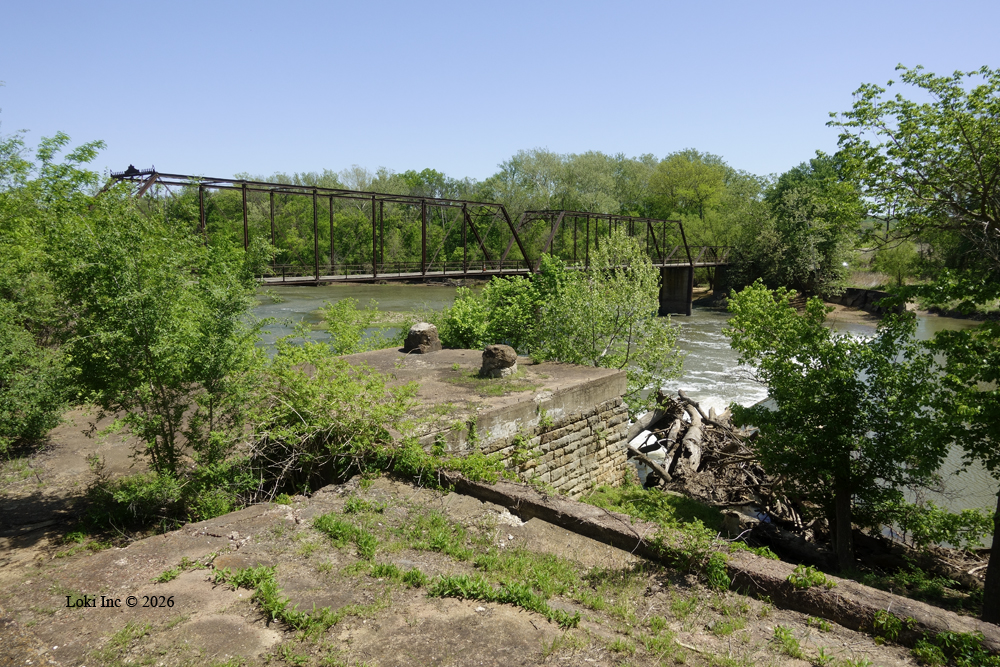
History of the Caplinger Mill
The mill had been originally built in 1840 by John G. Williams, who sold it in 1842 to the brothers Caplinger.
During the Civil War, bushwhackers (Shelby’s Raiders) burned down the mill and the Cedar County courthouse in a raid. In 1866, Andrew Masters purchased the site, and named it Master’s Mill. Two years later, he and J.P. Tracy built the first dam across the Sac River – it stood 10 feet high and was made of logs and cribs filled with rocks. As with many mills, ownership changed hands several times over between 1869 and 1893, when William A. Whinrey, Joseph Whinrey and George Likens purchased the mill and improved it with new machinery. At this point in history, the bridge appears on the scene, replacing existing ferry boat landings about 800 feet below (north of) the bridge.
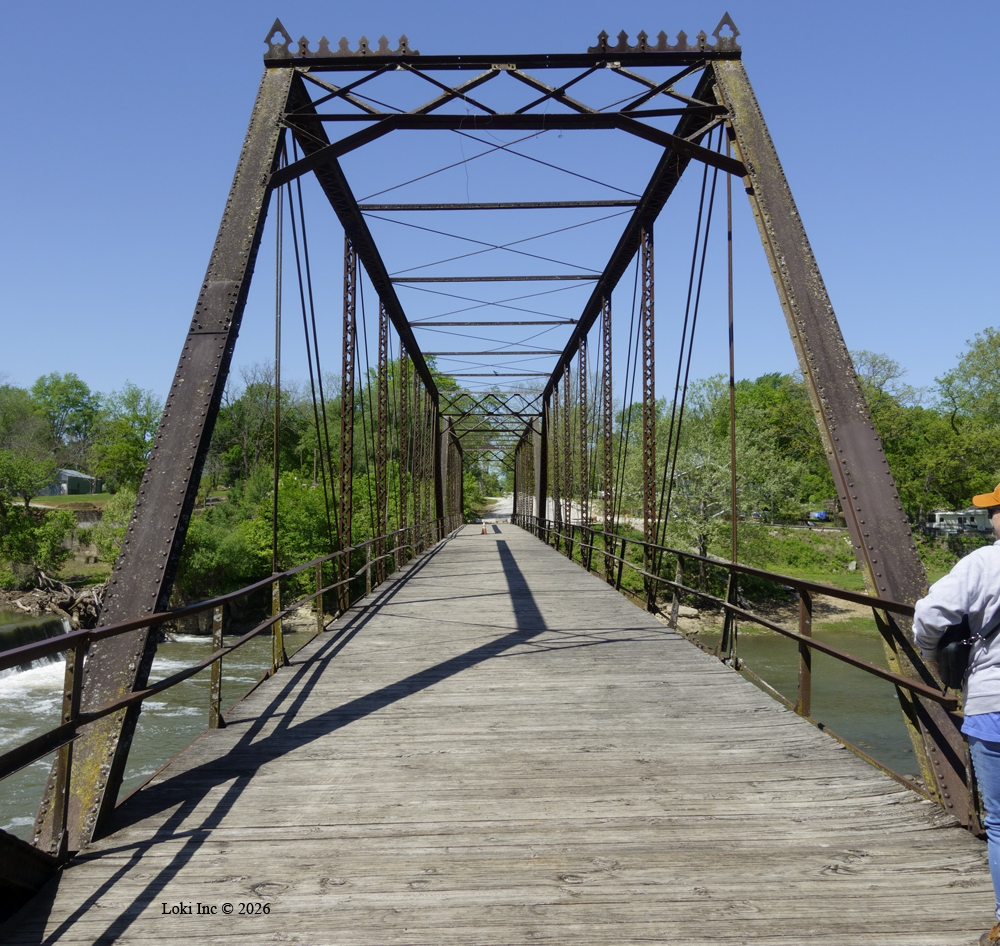
Caplinger Mills Bridge
In 1895, for $3,900, Cedar County contracted with the Chicago Bridge & Iron Company to build a bridge across the Sac a few yards downstream of the mill. It has the distinction of being the first “iron” bridge in Cedar County. According to a source from the Cedar County Historical Society, “The bridge was built in the lower southeast side industrial district in Chicago (No longer there). The beams were manufactured, loaded on a small, narrow gauge industrial switch train and transported to downtown Chicago, then loaded onto Atchison, Topeka & Santa Fe (ATSF) rail cars and sent to Kansas City. In Kansas City the rail cars were switched to the Kansas City, Clinton & Springfield (KCCS) Railway, often nicknamed, ‘The Leaky Roof Railroad,’ that traveled from Kansas City to Humansville, then to Aldrich, Missouri, where the line ended.”
My source continued, “After the bridge beams arrived at Humansville with nuts, bolts and several bridge engineers, it was met by local men and wagons to carry the bridge beams to Caplinger Mills over pioneer roads and rough terrain. The bridge was assembled onsite by the men of Caplinger Mills and the surrounding area under the guidance of the engineers.”
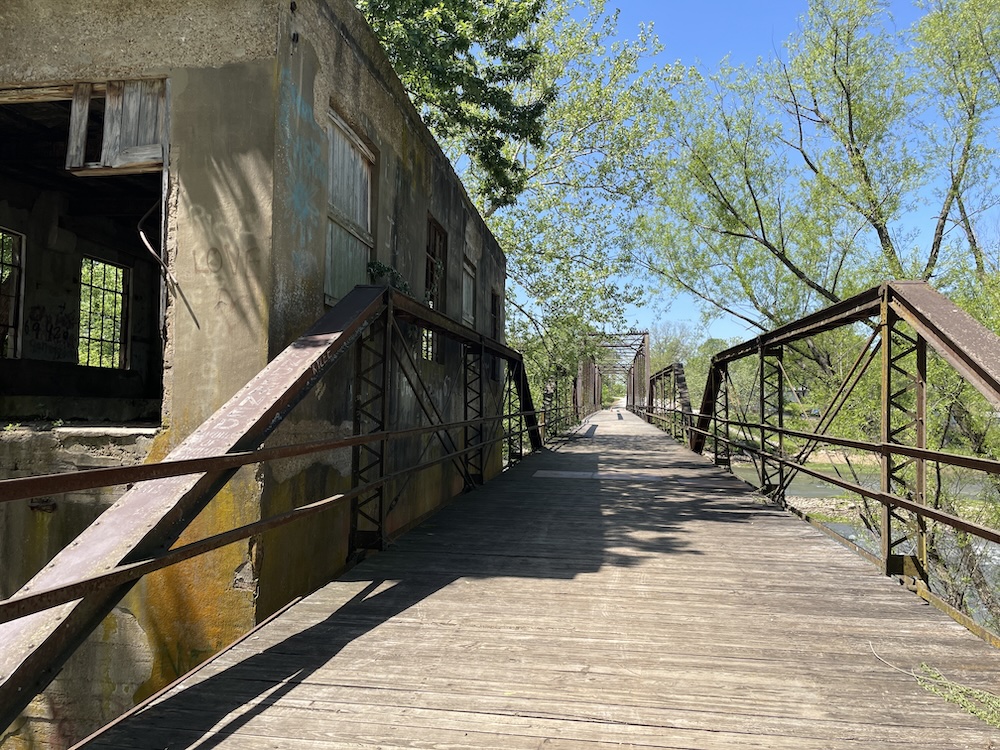
According to the website Historic Bridges, the Caplinger Bridge is one of the “longest pin-connected highway truss bridges in Missouri.” The website says, “It is also noted for its rare pin-connected Queenpost deck truss approach span at the west end of the bridge. The west end of the bridge has a 52 foot Queenpost deck truss, and the eastern end has two Pratt pony truss spans, one 86 foot span and the easternmost span being 70 feet. The pony truss spans seen today were likely added in 1919-1920 [a flood washed out this portion of the bridge in 1919 and then, again in 1920, washed out the replacement] The two main through truss spans are 140 feet each.” There are decorative finials atop the main spans, one on the west end of the western span, and another on the east end of the eastern span.
The portion of the bridge replaced by the Pratt pony truss spans is described in the summary on the application for the bridge to be included in the site’s recognition as a place worthy of distinction in the National Register of Historic Places: “The original east, or fourth, span of the bridge was a deck supported by lattice beams projecting from the river bed. The length of this span is unknown but, since the original bridge was to have been 405 feet long, simple arithmetic implies that it was 77 feet in length (although some of this distance could have been an earthen approach ramp.)” The bridge, along with the powerhouse and mill were listed on the Register on September 2, 1993.
The two Pratt pony truss spans came into place after flooding dropped the fourth section into the river and buckled the lattice beams. The dam, a concrete one that replaced the log dam, took 10 years to build with its concrete applied by the wheelbarrow load. If you look for them , you may be able to tell where the seams in concrete exist on the dam.
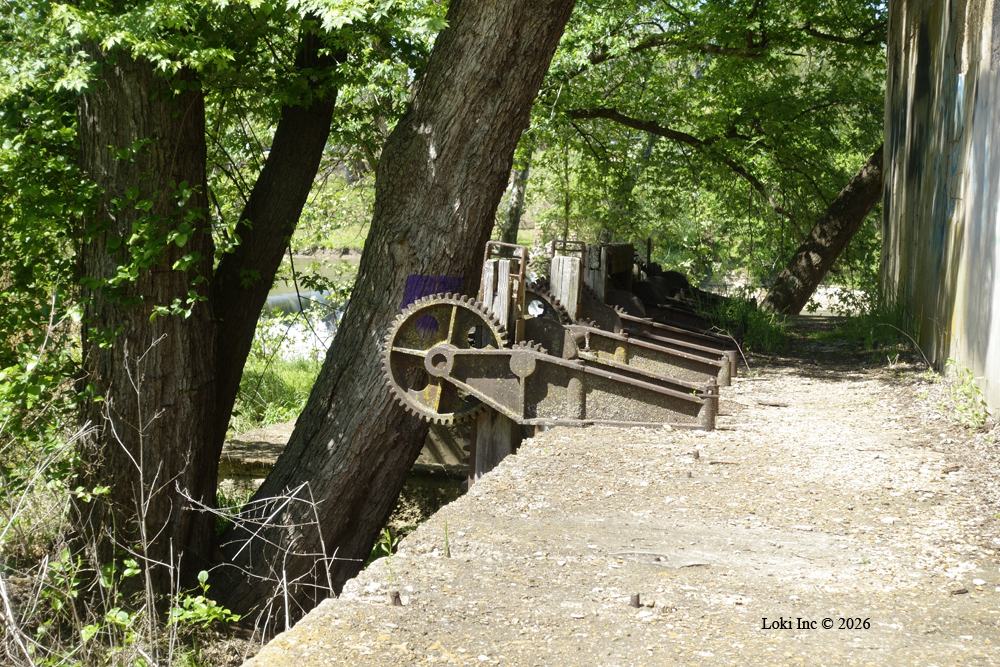
The mill had been producing electricity since 1917, but in 1925, Ozark Utility Company purchased power rights from the miller, W.A. Whinrey, and built the monolithic concrete powerhouse, which abuts the eastern end of the bridge. Whinrey had been using the mill to generate electricity for the local area.
Supposedly, Samuel Caplinger desired to build a bridge across the Sac back in 1851, and obtained permission from the Cedar County Court for this construction. Caplinger must have realized the importance of connecting both sides of the river for transportation to his mill. But because the mill burned in 1853, he never completed this task, being occupied with rebuilding the mill. In fact, he used some of the walnut timber that had been purposed for the bridge for the rebuild of the mill.
This bridge’s popularity was replaced in 1954 when Highway N bypassed the town and a new bridge was built. Only local traffic used the bridge.
Caplinger Mills Bridge Today
Today, the bridge serves as a beautiful vista, where you can enjoy the expanse of the Sac River, see the powerhouse remains and the old mill foundation. On the day we visited, we saw some elderly fellows fishing from the bridge. According to comments on social media, several people like fishing off this bridge.
The county condemned the bridge for vehicular traffic in 1983, and now it is only open to foot traffic. Erosion has affected the west end of the bridge and its iron supports. As for the future of this bridge, according to an article on Oct. 12, 2022, in the “Cedar County Republican,” “The property was acquired by the Missouri Department of Conservation, which allowed it to revert to the city. In 1989, the property was procured by the Caplinger Mills Bridge Preservation Society.” The Society is now defunct. Presently, there is a dispute regarding who owns the bridge – with one party believing that the county still owns it and another party believing they acquired it in a land purchase.
I contacted the Cedar County Historical Society regarding an update, and received a timely response regarding the bridge and its ownership. At this point, the Society believes it is an issue that has yet to be resolved and might quite possibly involve the court system.
According to a timeline of the history of the mill, obtained from the Historical Society, the status of the bridge’s ownership remains unresolved for these reasons: “Extensive research has been done as far as available federal, state and local archives are concerned. Records show that Cedar County has never abandoned or vacated the bridge, received petitions, held hearings or documented that the ownership of the actual bridge has changed hands since it was built in 1895.
“The county records do indicate that they have repaired the bridge several times over the years. According to the Missouri State Statutes, spanning over the years, the bridge could not have been deeded to another entity without proper filings with the State, local and public bodies, held a hearing and afforded the public the right to petition such a procedure. Ownership can not change without those legal proceedings and none have been recorded. However, the bridge can be condemned without hindrance due to safety issues. The bridge was condemned and closed to vehicular traffic in 1983, but remained open to pedestrian traffic, concluding that it has never been abandoned or vacated. Pedestrian traffic has continued since that time and work has been done on the bridge to make it safer.
“The State mandated that a public owned bridge had a right-of-way that no private entity could claim. It was noted that it was done to keep adjoining land owners from claiming ownership or attaching gates, fences, signs or other structures to public owned bridges back in the day. Old Cedar County deeds for land ownership do not state that the ownership ‘includes’ the bridge; they state that the property line runs ‘along’ the bridge. Over the years, several land surveyors have had different opinions as to the plats of surveys and ownership.
“At this time, it appears that Cedar County still owns the bridge, but Fergy and Sons still insist that they own the bridge. While the controversy continues, the bridge has been denied important structural repairs. Local citizens have volunteered labor and funds to help repair the bridge, even starting another bridge preservation society, but their quest goes unanswered and the future of the old icon remains uncertain.”
Meanwhile, it’s well worth a trip to see, and since you’re near Stockton Lake, if you haven’t been there, you should take in the small town of Stockton and its beautiful lake.