After discovering 26 mills in the Missouri Ozarks and detailing trips to see them in my first book, I’ve decided to start on another book, a sequel, that features more information about the first 26 mills, along with another Missouri Ozarks mill, plus additional information about mills found in the Arkansas Ozarks. Mitchell’s Mill, located on Blanchard Creek, a tributary to North Sylamore Creek, just moved to the top of my “most favorite mills” list. Here’s why.
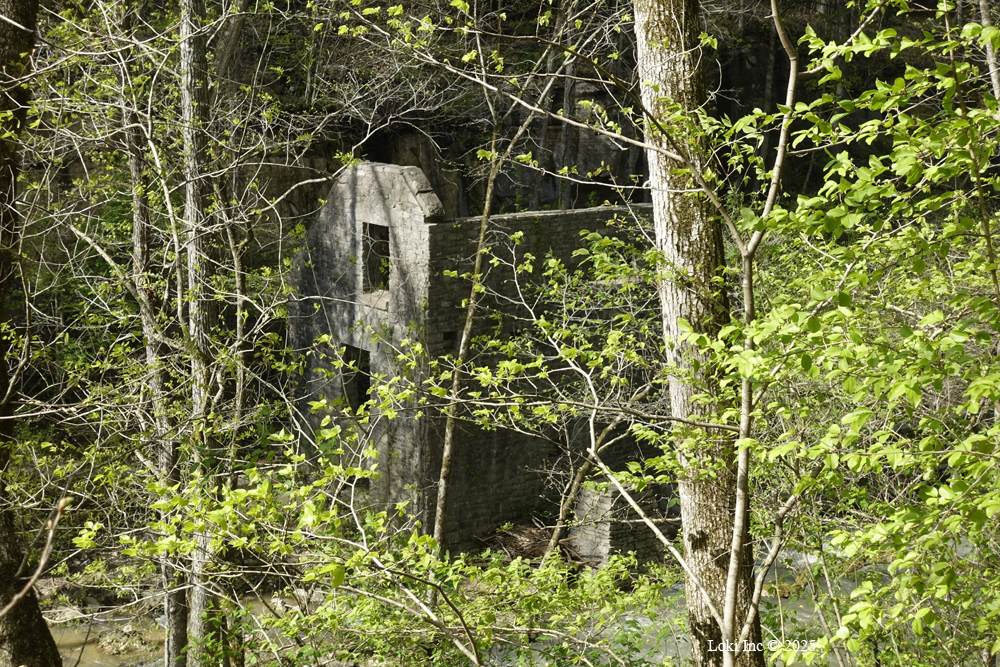
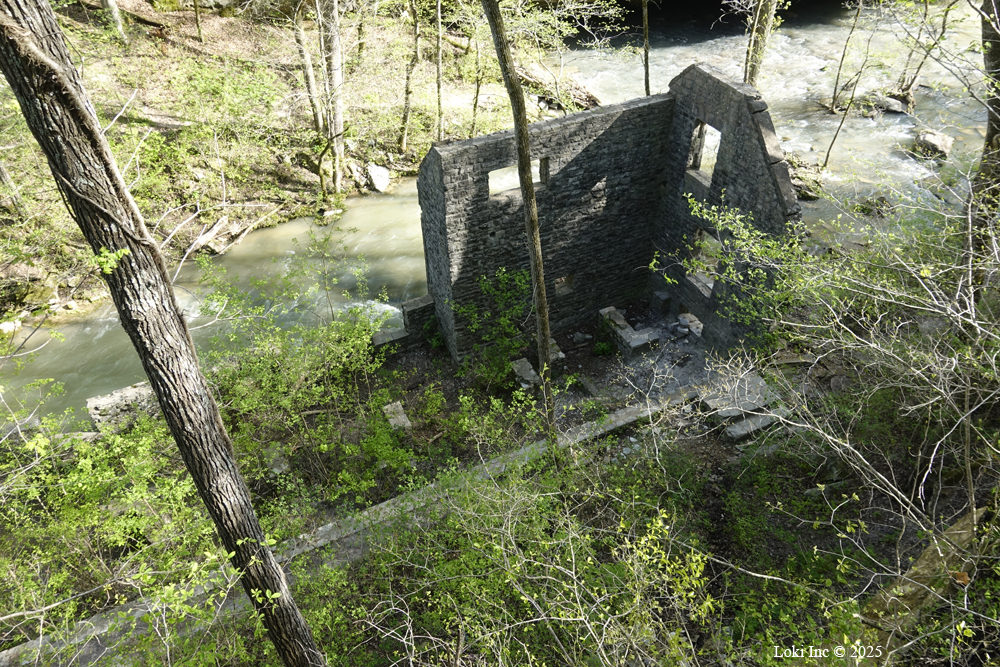
The setting is unmatched anywhere. In fact, I call it the wildest mill of them all. Set right down in a canyon stream in the Blanchard Springs Recreation Area, nestled in the interior of the Ozark-St. Francis National Forest, with bluffs on either side, the old mill stands in a ghostly manner and commands respect.

History of Blanchard Mill
John Blanchard, a Confederate soldier, decided to move to Arkansas from Kentucky after the Civil War. Supposedly he was wounded in the war. He obtained 160 acres, which included the site along the stream. He built an undershot grist mill made of oak and walnut. Blanchard died in 1900, and Steve Mitchell purchased the mill where he ground corn and ginned cotton until his death in 1928. At the time, a flume ran from a dam on Mirror Lake to the mill. Blanchard Spring forms Blanchard Creek, with the creek filling Mirror Lake. The outflow from Mirror Lake goes past the mill and on into North Sylamore Creek.
The family sold the site to the Forest Service shortly after Mitchell’s death, which then began reconfiguration of the mill dam to form Mirror Lake in 1940. The mill sits approximately 150 feet from the lake. The Civilian Conservation Corps worked on the millsite in 1942 and it’s obvious that they added their signature rock work on the walls and foundation. Supposedly, the plan for mill included complete restoration of the mill to operational condition. In fact, according to a plaque onsite, the CCC tore down the old mill in order to reconstruct it.
However, when World War II hit, the men in the CCC went to other (more deadly) action sites. Pieces of the mill went to the war effort, which was a common occurrence during the 1940s. Several mills in the Ozarks sent metal machinery and parts to be melted and used for military projects or arms.
Finding Mitchell’s Mill
There are two good ways and one slightly treacherous way to see the millsite. Of course, we opted for the more difficult and longer way, following a rough and slippery trail across the creek from the mill without realizing there is an easier approach on the mill side. The view, though was absolutely gorgeous, and we started our hike at the Blanchard Spring Trailhead parking area upstream of the dam site – where rushing water spills over – and meandered along the path along the east side of Blanchard Creek toward the lake. After visiting the lake and overlooking the mill, we backtracked to the parking area and drove back down the entry road.
After parking on the shoulder near Mirror Lake, it’s easy to find a boardwalk trail with an observation deck that overlooks the mill and also, a more primitive trail that takes you streamside.
Future State Park
On Dec. 8, 2025, Gov. Sarah Huckabee Sanders signed a memorandum of understanding with the U.S. Forest Service, designating Blanchard Springs Cavern Complex, which is nearby Blanchard Mill, as a future state park. It will someday become the 53rd state park in the system.
What To Do When You’re There
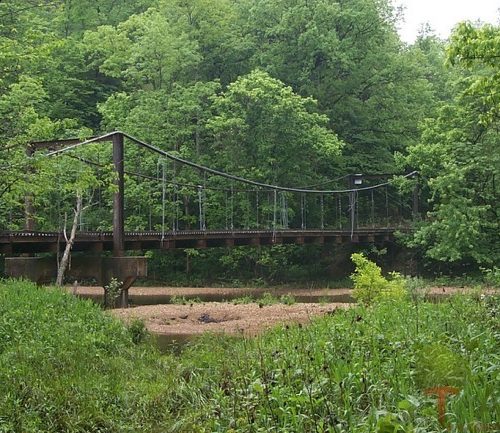
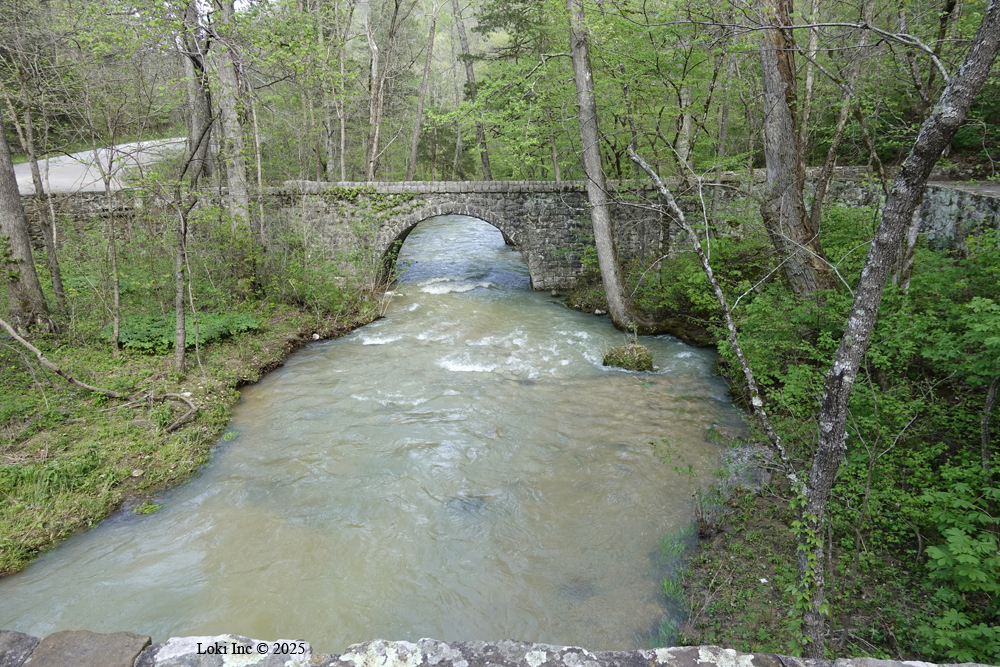
Plan to spend more time in this gorgeous, wild area of Arkansas. You can tour Blanchard Springs Cavernswhen it’s open, hike the Mirror Lake Trail or other trails (including an accessible trail), drive across the Sylamore swinging bridge in Allison or fish the White River, which is nearby. There’s also the Sylamore Scenic Byway, one of Arkansas’ finest stretches of roads to tour.
Learn more about Blanchard Springs and the Ozark-St. Francis National Forest.
How to get there: Located in Stone County, Arkansas, northwest of Mountain View, Arkansas.