After I published the first book on mills in the Missouri Ozarks, The Library Center (in Springfield, Missouri) invited me to make a presentation featuring the topic as part of its “Preserving the Ozarks” series. After the presentation, Craig Tucker approached me and asked me if I’d ever heard of Dilday Mill in Dade County.
I hadn’t.
He offered to guide my husband and me to the site, and said he often kayaked past it, since it is located on Turnback Creek, near South Greenfield. We finally made it out to the site in the springtime, after waiting weeks for the for rain to quit and local roads to dry.
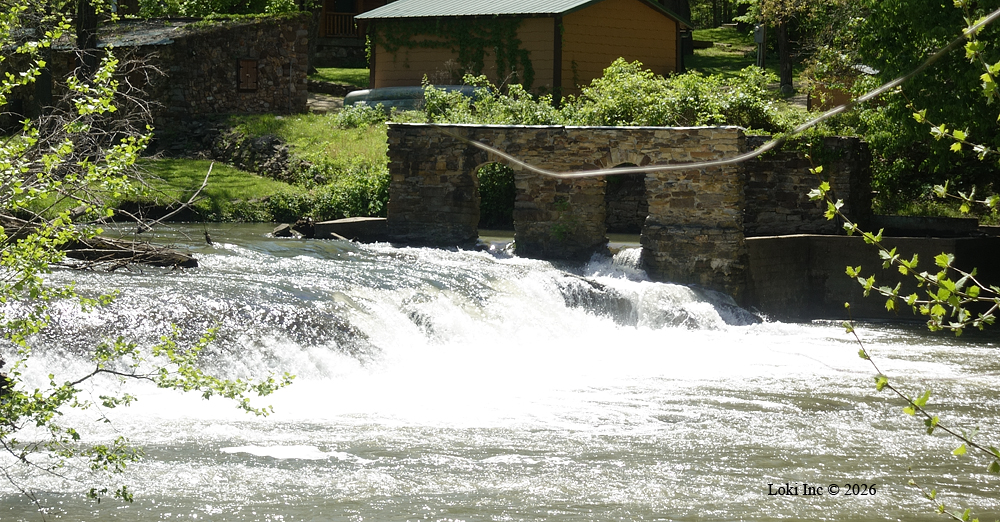
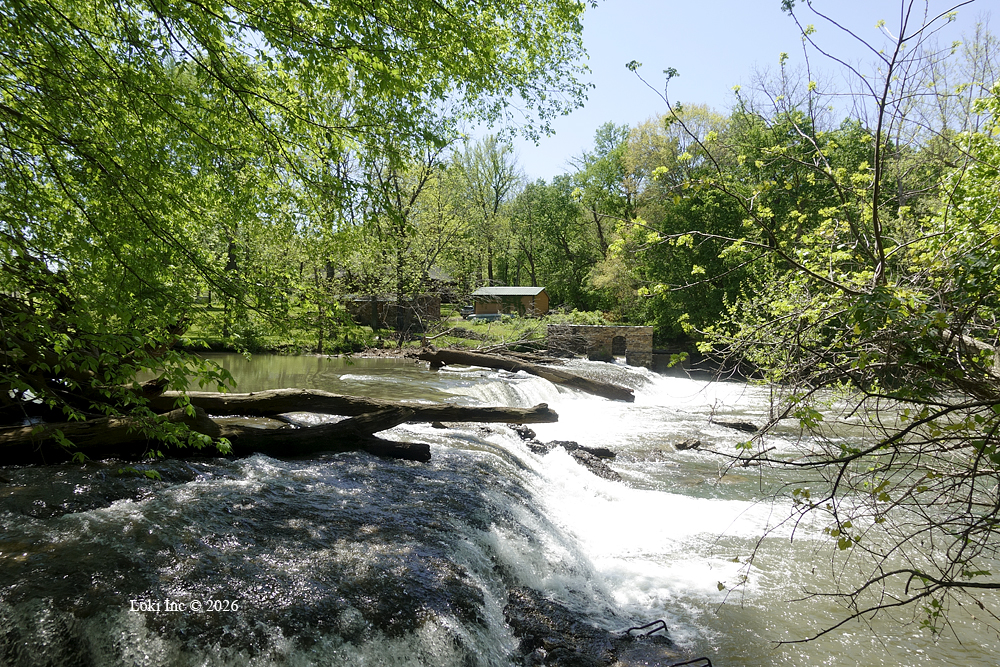
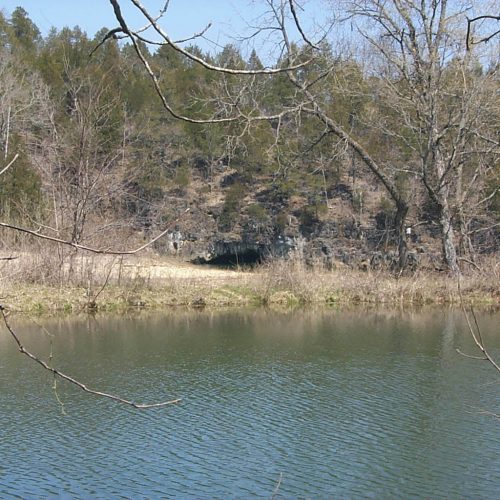
The Dilday Mill is located on the west bank of Turnback creek, a stream that we learned about after visiting Britain Mill a few years ago. It sits to the east of what’s left of Turnback, Missouri. According to Brenda Islenbletter, of the Dade County Genealogical Society, there were at least 10 mills operating in Dade County along the Sac River, Turnback Creek and Limestone Creek back in the day. On the day we hiked into the woods to see the Dilday Mill, Turnback gushed forth with a roar, swelling the banks and rushing through the remnants of the foundation of the old mill.
All that is left of the mill is its foundation and possibly what might have been considered its basement that more than likely held a turbine and other machinery.
Settlers first appeared in Dade County sometime around the early 1830s, and began building mills. By 1977, only three of the mills still stood: Hulston, Dilday and Comet. You can read about Hulston on this website, and the Comet Mill is no longer there.
Dilday Mill History
Britton Finley built the first grist mill at this site in 1844. The site also included a sawmill and blacksmith shop. By 1860, it had become a polling place for elections. Reportedly, the Confederates burned the courthouse in Greenfield in October 1863, and the mill also burned to the ground sometime during the Civil War, but I cannot find out who was responsible.
Another ‘Comeback’ Mill
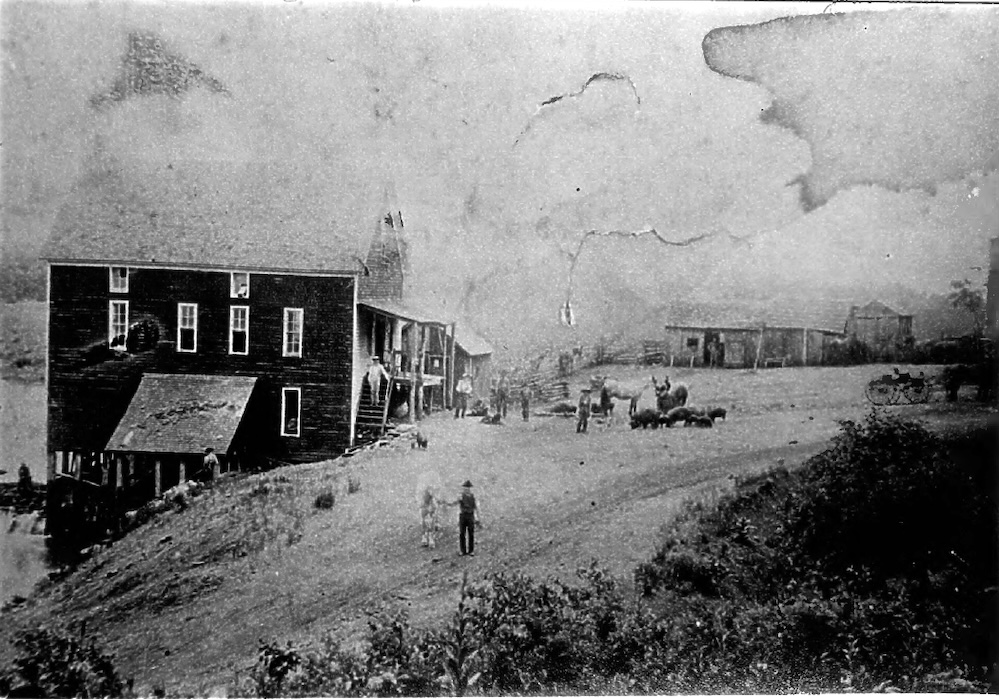
As with many mills, Dilday Mill made a comeback after the Civil War because there still was a need in the area for milling and the setting hadn’t been destroyed. John Balas Dilday served in the 11th Kansas Cavalry during the Civil War. In December 1867, he moved over to Missouri, and settled in the Turnback community and was appointed its postmaster. I have read that he had lived near Turnback before the Civil War but went home to Kansas during the war, and then, moved back after the war and rebuilt the mill. However, the application for placement in the National Register of Historic Places, states that he bought the property in 1867. In fact, according to the paperwork, Dilday purchased the three-quarter section mill site, and on Christmas Day, 1867, his neighbors helped him frame up the new, three-story mill. That seems odd to me to work on Christmas, but he must have been in a hurry and had good neighbors, as well.
Dilday served as the postmaster until his death in 1895. After his death, “The Greenfield Vidette,” (August 15, 1895) published this information about him in an obituary: “The deceased was a prominent figure in Dade County politics, always manfesting [sic] great interest in the campaigns and their outcomes. He will be missed by his many friends in this county.”
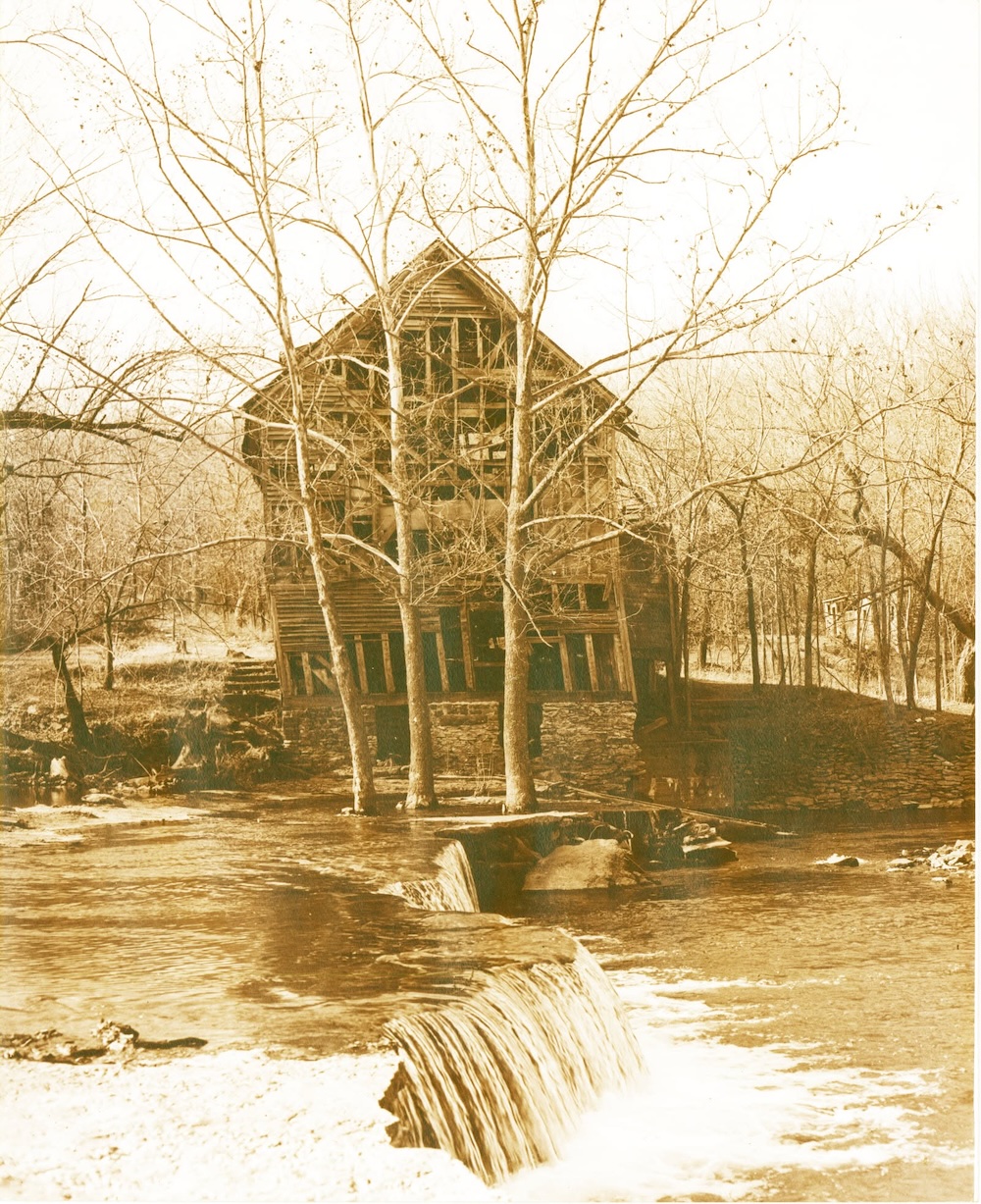
The mill operated until 1943, and as many mills have done throughout their histories, changed hands again and again during its operational years. Purportedly, parts of the mill – the turbine, flour rollers and 42-inch buhrstone – were sold in the 1950s.
It was listed on the National Register of Historic Places in 1977, then collapsed in 1982 and was delisted in 1994.
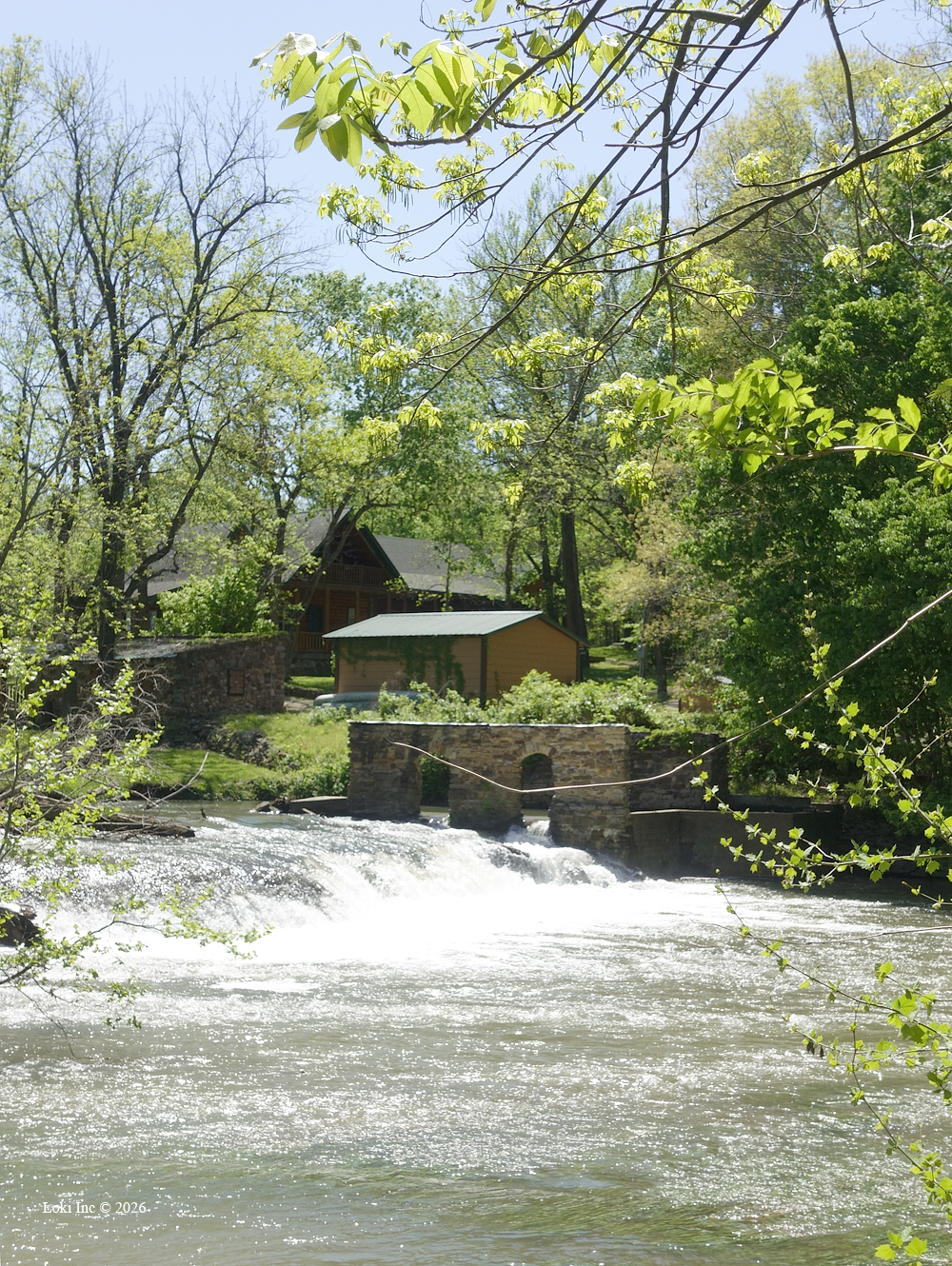
Still Worth the Trip to See
It’s still worth a short hike to see it, in a beautiful setting in the Ozarks. The Dilday Mill site is on private property, but you can find access to a trail that will take you to a viewing area across the creek from the mill. Located four miles west of Everton, Missouri, on State Highway K, the trail starts on the south side of K just before the Turnback Creek bridge.
If you want to get onto or into Turnback Creek, check out Fiddlers Ford Access.
37°19′31″N 93°46′49″W