
I am a native North Dakotan who spent her youth not only in North Dakota, but also, in South Dakota, leaving home when I was 20. Throughout the years, I have returned to the Dakotas and it seems like each trip I discover something new to me – such as beautiful barn quilts along US Rt. 2, a Jewish cemetery (Ashley, North Dakota) and during my last trip, the Redlin Art Center in Watertown, South Dakota.
My first exposure to Redlin’s art happened when I noticed his beautiful prints offered at National Wild Turkey Federation banquets, several years ago. These pictures herald the beauty of the outdoors and draw an observer in, almost as if transporting that viewer into the setting or at least, allowing him to stand on the perimeter as the scene unfolds. I purchased “Twilight Glow,” and I hadn’t even been duck hunting at that time. But … after I started duck hunting, I understood even more the draw to this type of outdoor pursuit. (I have a beautifully mounted drake mallard in my home as a result. Redlin’s painting features a pair of mallards about to land.)
The other memory I have of Redlin’s art is when my parents invited me to choose a print for myself at a local art gallery in Vermillion, South Dakota. I chose “Homeward Bound,” because my mom told me about how when grandparents lived on a farm in North Dakota, they had two draft horses named Billy and Dolly that pulled their sleigh in the winter time (as late as the 1940s). It was their transport to church and other places, I was told. My mom would tell stories of getting bundled to ride in the sleigh.
When I had the opportunity to visit the Redlin Art Center this past summer, I reached out to Julie Ranum, the executive director of the Center and requested a tour. Within hours, she responded and invited me to meet her the next day.
She said, “People come in from all over the world and they maybe don’t recognize the name Terry Redlin, until they start looking at the art. Sometimes there’s a disconnect there, but the work is recognizable. This [Center] is Terry’s gift.”
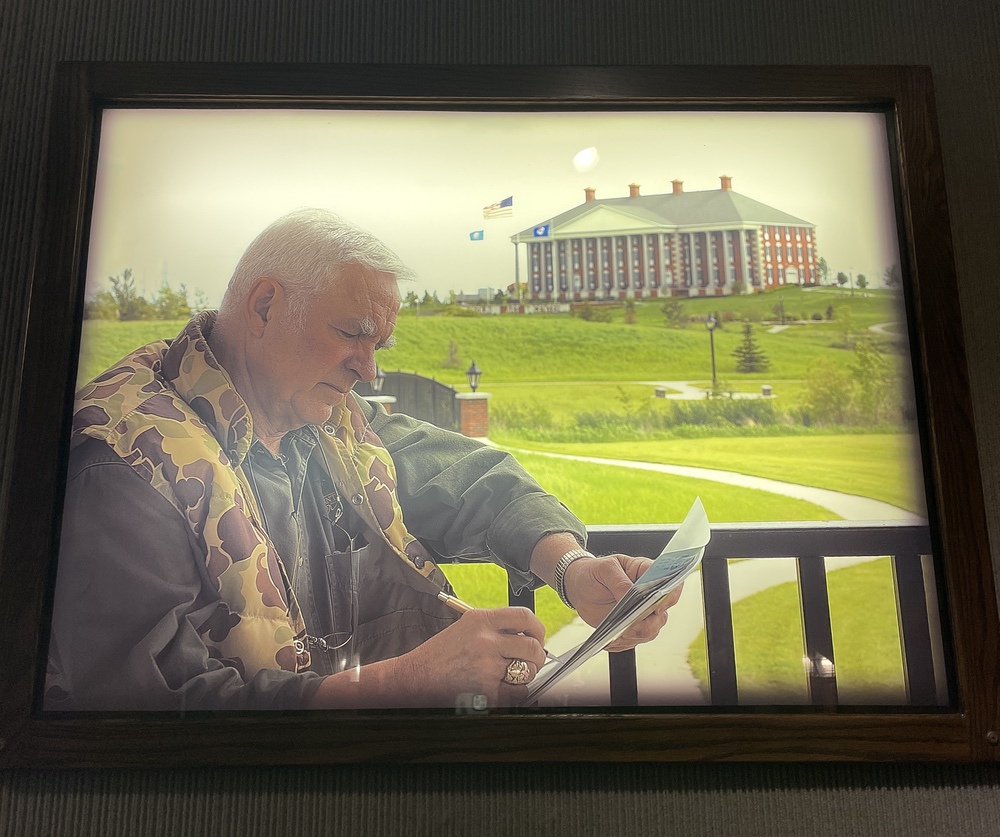
Terry Redlin
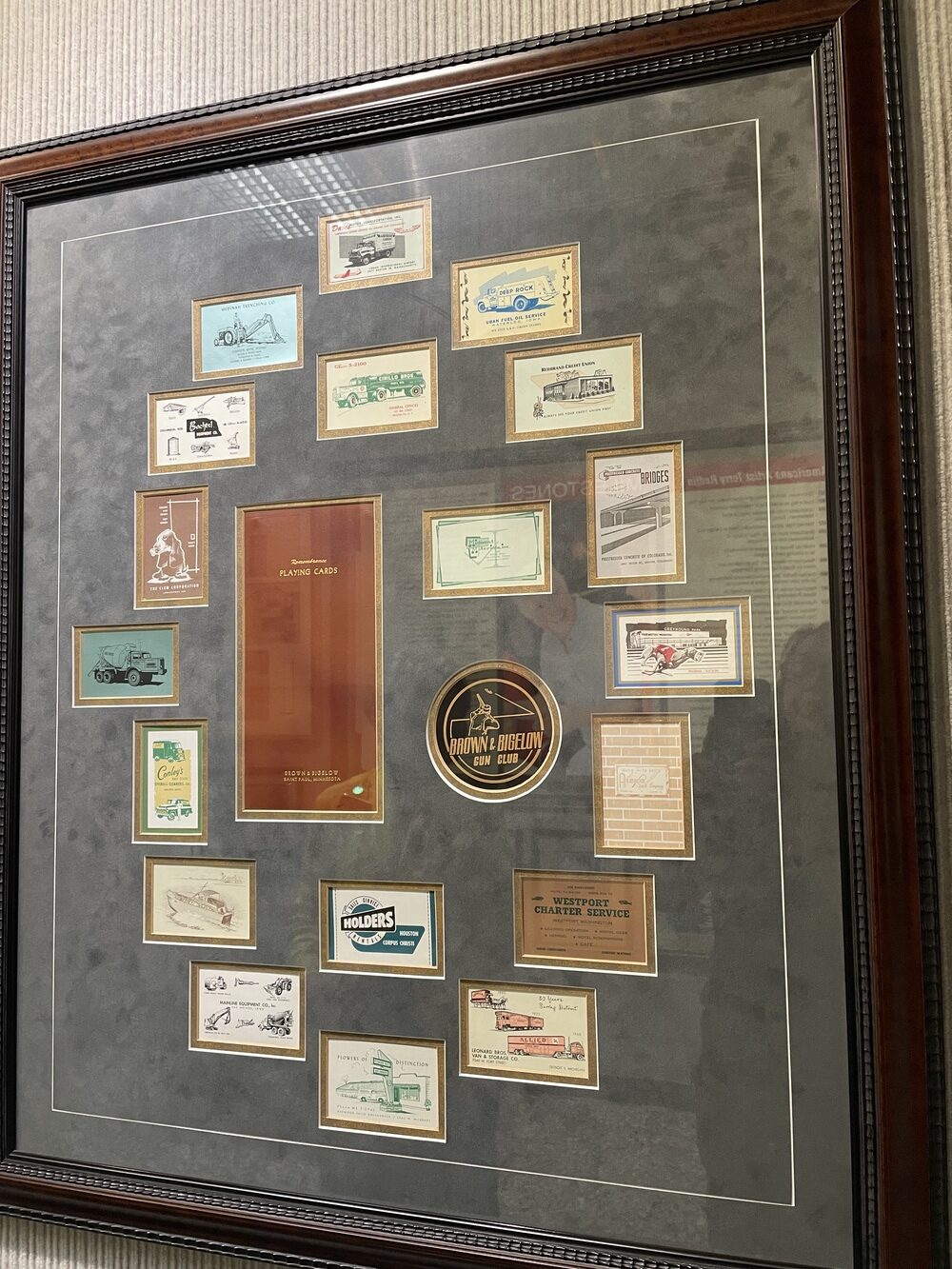
Redlin’s story includes being born and raised in Watertown. When he was 15 (1952), he was a passenger on a motorcycle that was hit by a drunk driver. He lost a leg as a result. Fortunately, South Dakota offered a scholarship for students with disabilities and he received a $1,500 scholarship that funded art school. He attended the St. Paul School of Associated Arts in the mid-1950s, and upon graduation, worked for 25 years as a commercial artist in Minneapolis/St. Paul. For his first assignment, he illustrated the backs of playing cards, some of which are now on display in the Center.
In 1977, at the age of 40, Redlin decided to venture into the world of freelance wildlife art. He grew up hunting and fishing, and loved being outdoors. Purportedly he had once dreamed of becoming a forest ranger, but those hopes had been dashed after the accident. He made a five-year plan to exit the world of commercial art, and with a young family to support, he hoped that would become a reality. Within three years, he was earning more as a freelance artist than at his day job as an art director for a publishing company.
The Birth of the Redlin Art Center
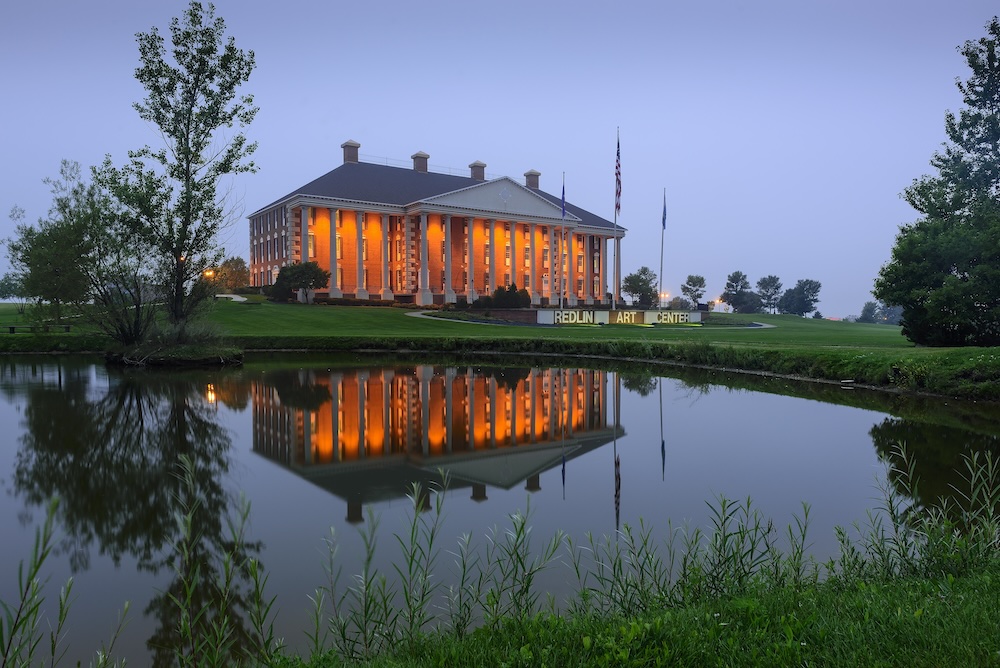
In 1985, Redlin’s son, Charles, urged him not to sell the originals because Charles wanted someday to build a home for Redlin’s artwork, which he called “romantic Realism.” Redlin decided the repository for his artwork would be in South Dakota, as a thank you to the state for giving him the gift of advanced training, something he would not have been able to afford in his youth. The project cost $10 million in 1995-1996. Charles Redlin designed the building. The interior is black, gray and white, so that the original colors of the paintings can be enhanced. All walls are carpeted so the Center can easily move art and not have to patch walls, and of lights – chosen by Redlin – are on motion sensors, so if there’s no activity in the gallery, the lights go off.
The Center opened in 1997 with 100 original oil paintings, and today, 175 originals are on display. To date, thirty-four of the paintings are that he originally sold have found their way back to the Center. Redlin didn’t record to whom he sold the originals. Ranum said, “When we are contacted by an owner or by a representative of an owner, it’s kind of like Christmas morning.” There are 41 originals still out in the hands of private collectors. The Center does not do appraisals, a policy put in place by Redlin. He didn’t think it would be appropriate for the Center to be the appraiser, said Ranum. “We are thrilled to find out that someone has a painting, it’s being cared for and appreciated, and if they don’t want to part with it, we understand,” she explained.
A Walk Through the Redlin Art Center
Throughout the museum, you’ll see little signs that read “Welcome home” to signify the paintings that have found their ways back to the Center from private collectors throughout the years. In addition, if you see a URL listed below a painting and log into the address, you can hear Terry Redlin talk about it. “His art doesn’t need a lot of explanation, but if you take advantage of the audio tours or read the story about the piece, there are tidbits that only Terry knew that he shares,” said Ranum. Terry and Charles made all the recordings, which originally aired on local radio stations as “The Redlin Minute.”
She pointed to a beautiful painting “Night Flight,” which earned him the title “International Artist of the Year,” in 1983 from Ducks Unlimited. It had been privately owned. Ranum said that Redlin credited Ducks Unlimited and “The Farmer” magazine for his surging popularity in the 1980s.
Terry Redlin, the Man
Ranum recalled Redlin’s personality as humble and kind. According to Ranum, Redlin popped in to the Center one day with a cardboard box. He handed the box to her, and when she asked him what was in the box, he said, “These are just some of my sketches. I’m not sure if you want them for the gallery or not.” Among the many pencil sketches were Redlin’s plate studies, because at that time collectible plates were popular. In fact, you can see his plate studies for the entire “America the Beautiful” series. Ranum said, “‘Thank you so much, Terry! I think we’d love to have these!’ I don’t think he had any idea that we would frame them and put them on display.” All of these pencil sketches are now on display in the Sketch Room.
Last April, the Studio Collection was unveiled. In it are over 50 unfinished paintings that were left behind in Terry’s studio when he retired. The collection includes some pieces that are simply pencil on board and others that are full paint from border to border. This permanent display takes viewers through Redlin’s process of first sketching his idea in pencil, then overlaying paint to create the final masterpiece. Ranum said her hope is that showing Redlin’s unfinished work will inspire other artists.
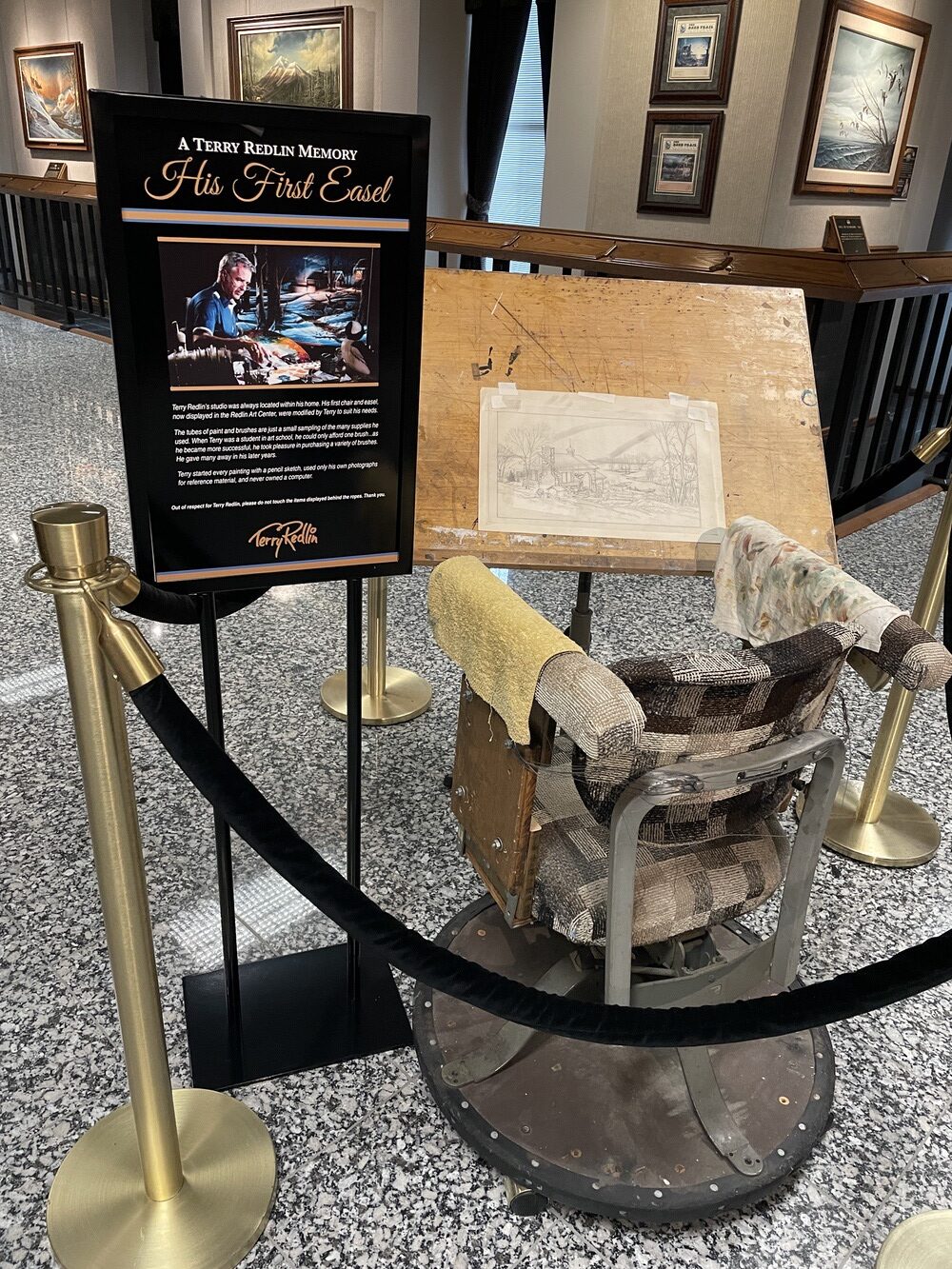
Ranum said, “Redlin was an inventor. He was a unique person in that he had both an art and a science mind. He created and built his own drying box, because one of the challenges with oil painting is the drying time. He’d have multiple paintings in his drying box at any given time so that he could be more efficient and work faster. He would credit that to his background as a commercial artist. … He said, ‘I’m not the kind of artist that waits for inspiration. I get up every day and go to my easel and paint.’”
A Compelling Combination of Redlin’s Personality and Art
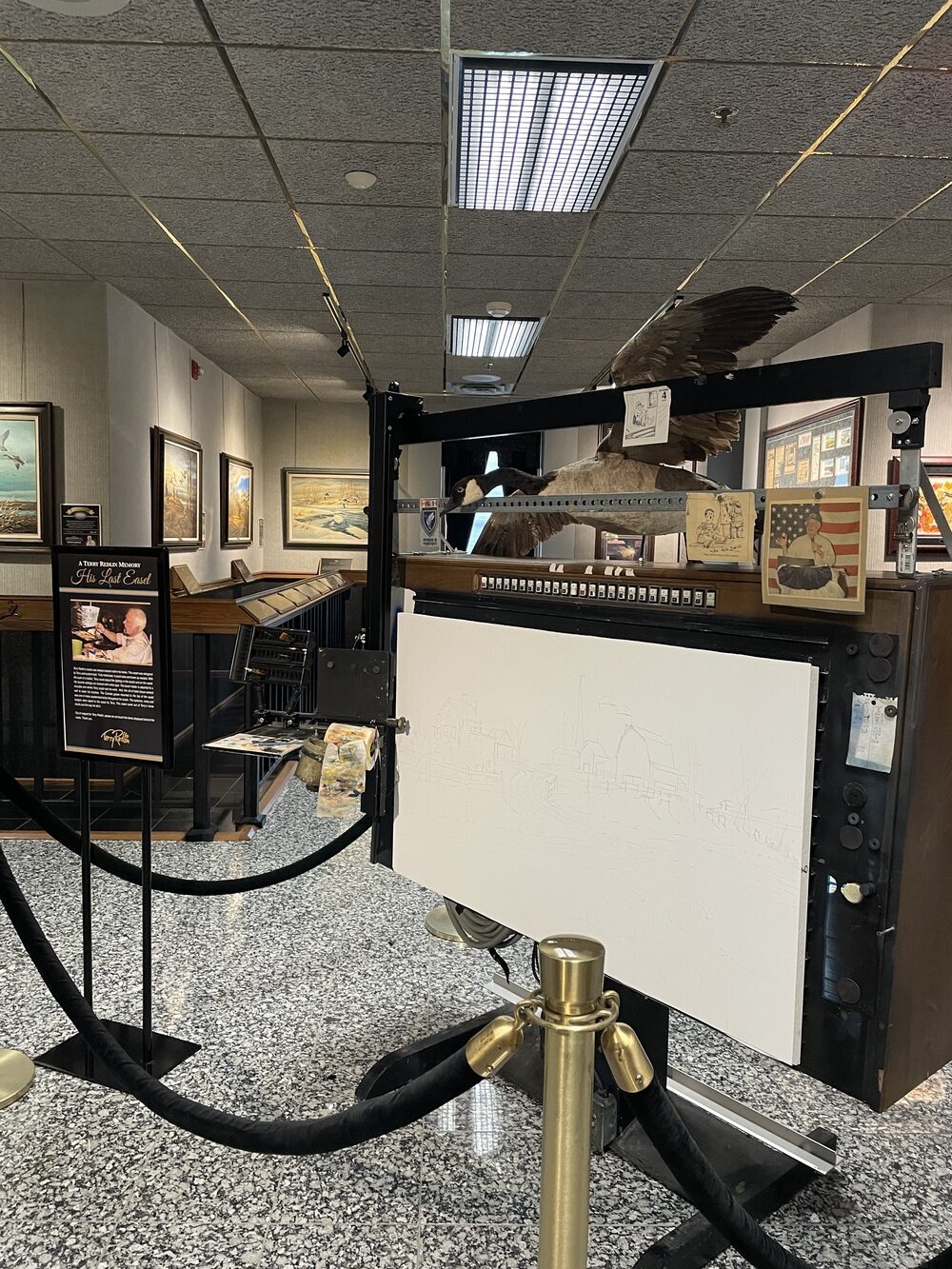
Also on display sits Redlin’s last easel that he designed, brought to the Center from his home – just as it stood when he left. He had it built with the capabilities of motorized adjustment for the easel, and also controls for the track lighting in his studio at home.
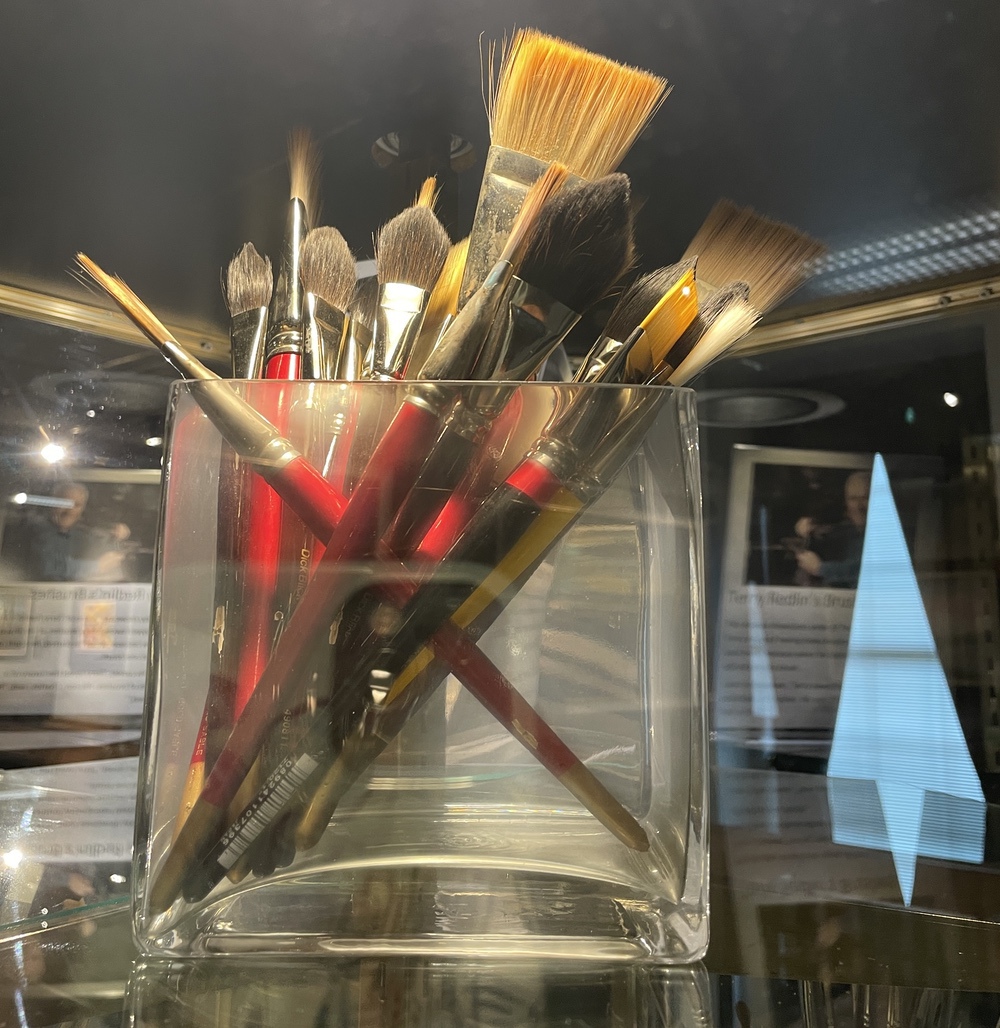
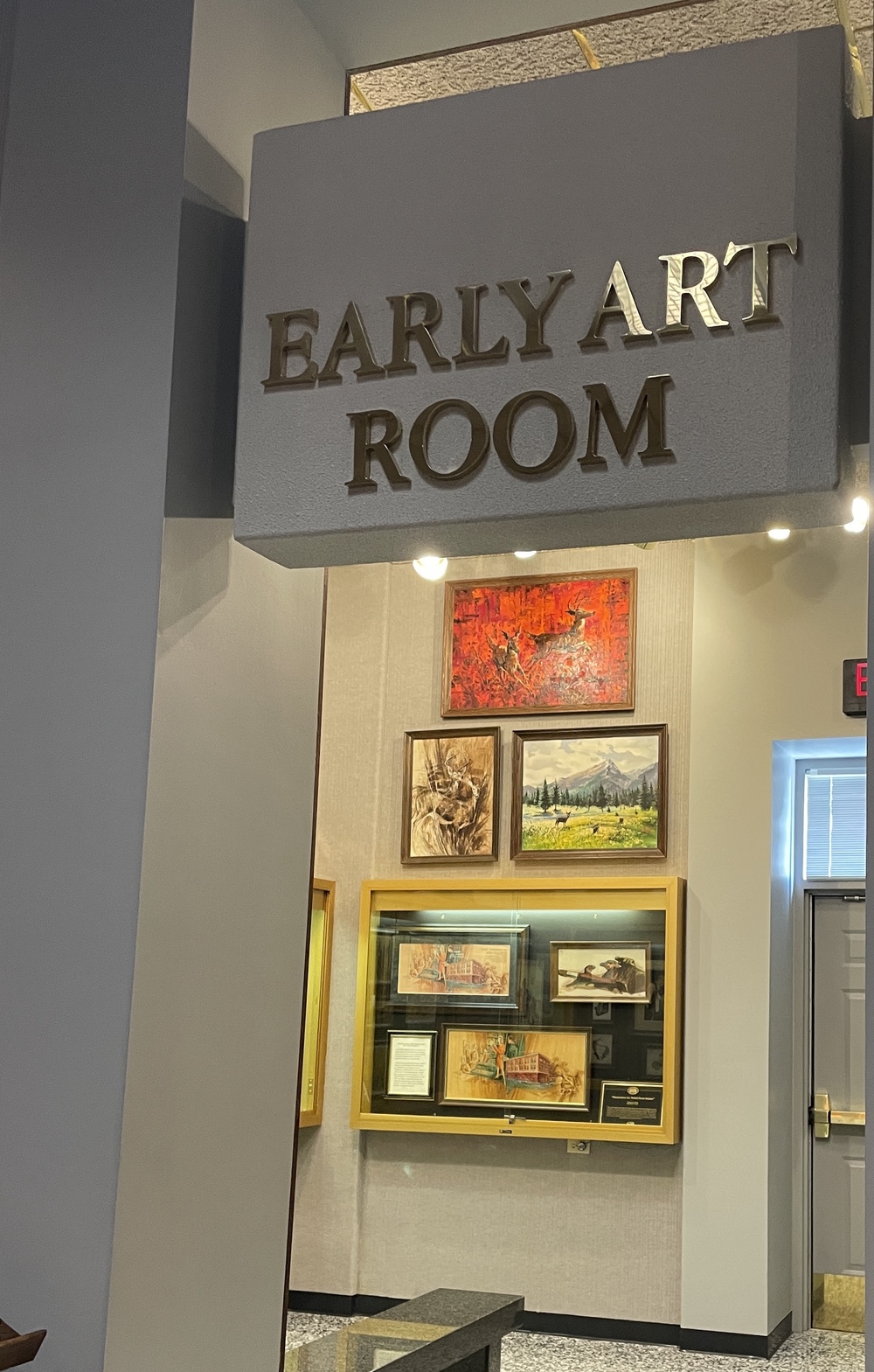
In the Early Art room, you may see Redlin’s artwork from youth throughout the years to becoming a world-famous artist. As a boy, Redlin would hang out with his dad – an auto body mechanic – and Redlin’s pencil sketch (that he did at age 6) of Bugs Bunny hangs in the studio. Ranum said some of the sketches are on the backs of work orders from the body shop. The exhibits also include a sketch of a cocker spaniel – the very first art project that he turned in at art school. Ranum said Redlin’s instructor, Cecil Johnson, supposedly said, “I took one look and knew there was nothing I could teach this kid.” Johnson would start every class every fall by asking the students to draw what they wanted, and Redlin drew the dog. Johnson supposedly asked Redlin if he could purchase the sketch for his wife, a dog lover. Redlin said, “No, you can just have it. It’s just a school project.” When Johnson passed away in 2005, the will dictated that the sketch was to be returned to the Center. The collection also includes architectural renderings, portraits of children and two paintings of a man fishing – done while in the waiting room of the delivery area, awaiting the news of the birth of his first child.
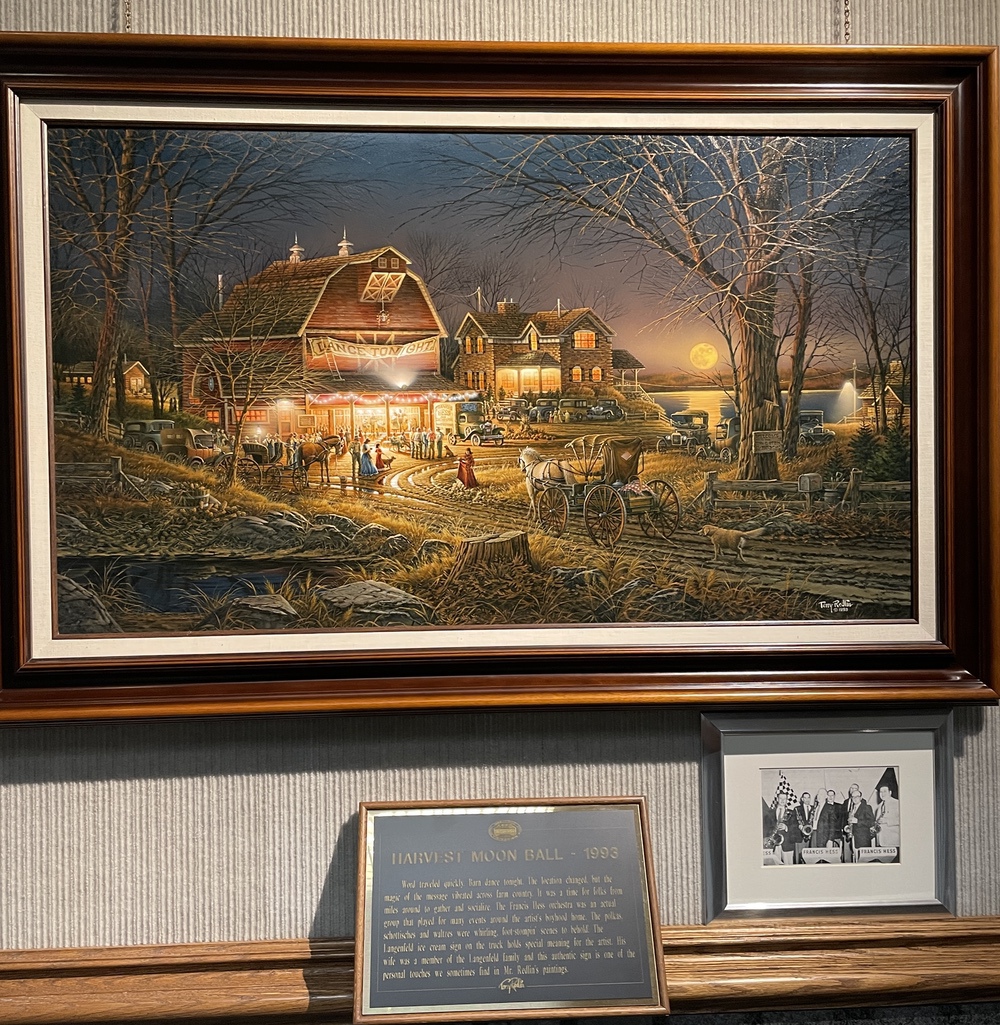
The first floor features wildlife art. Ranum noted that in the painting titled “Coming Home,” Redlin placed the first person into his artwork. Several galleries, who had standing orders for anything Redlin released, refused the prints and cancelled their orders – explaining that it wouldn’t represent Redlin’s work well to have humans included. Ranum said, “This one sold out faster than anything he had ever done.”
More to the Redlin Art Center Than a Building
The Center sits on 30 acres of property with more than one mile of walking trails, six picnic gazebos and a pavilion for weddings and special events. Ranum said, “This whole park was designed by Terry. He had ponds dug so that when one is full, it trickles into the next and the next … He mapped out where every trail would go and we call this his ‘living painting.’ He wanted people to enjoy nature and the great outdoors as much as he did.” Redlin enjoyed hunting and fishing. Later in life he told Ranum that he was too lazy to get up early and go out duck hunting, and would rather paint them.
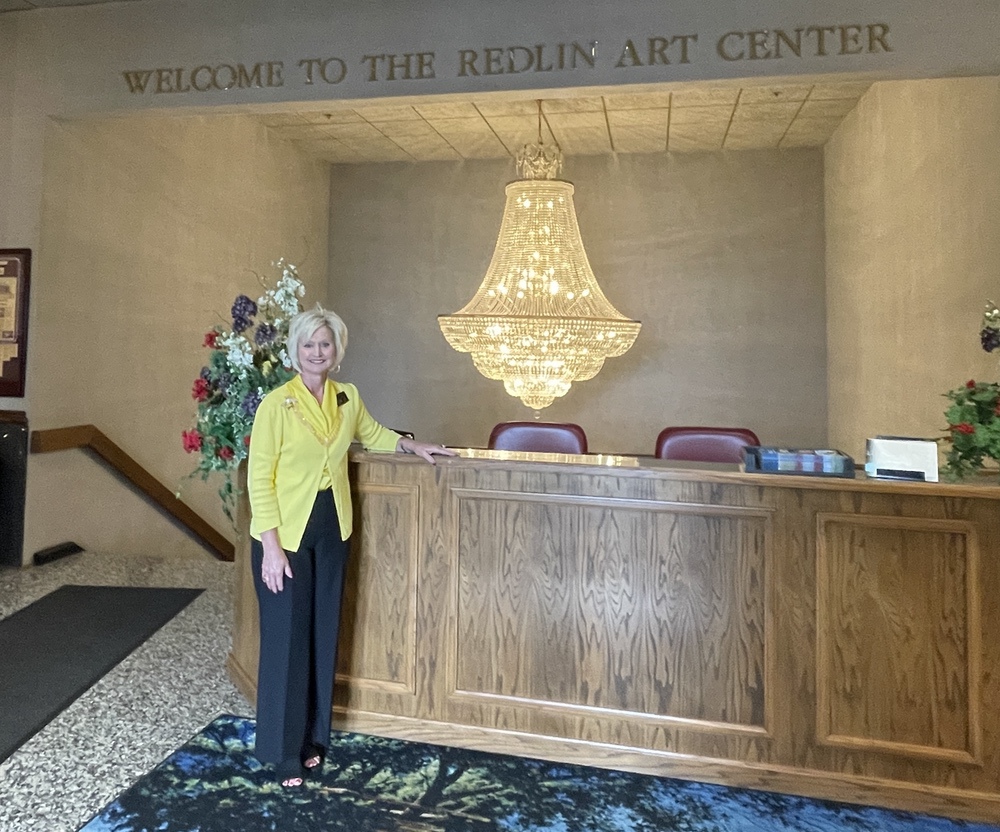
Ranum’s story
Ranum has been working at the Center for 30 years. She said, “Terry hired me. He was exactly as you would imagine. He was incredibly kind. I never heard him speak a harsh word. He was very humble. He said to me, ‘Julie, I only need one house and drive one car.’”
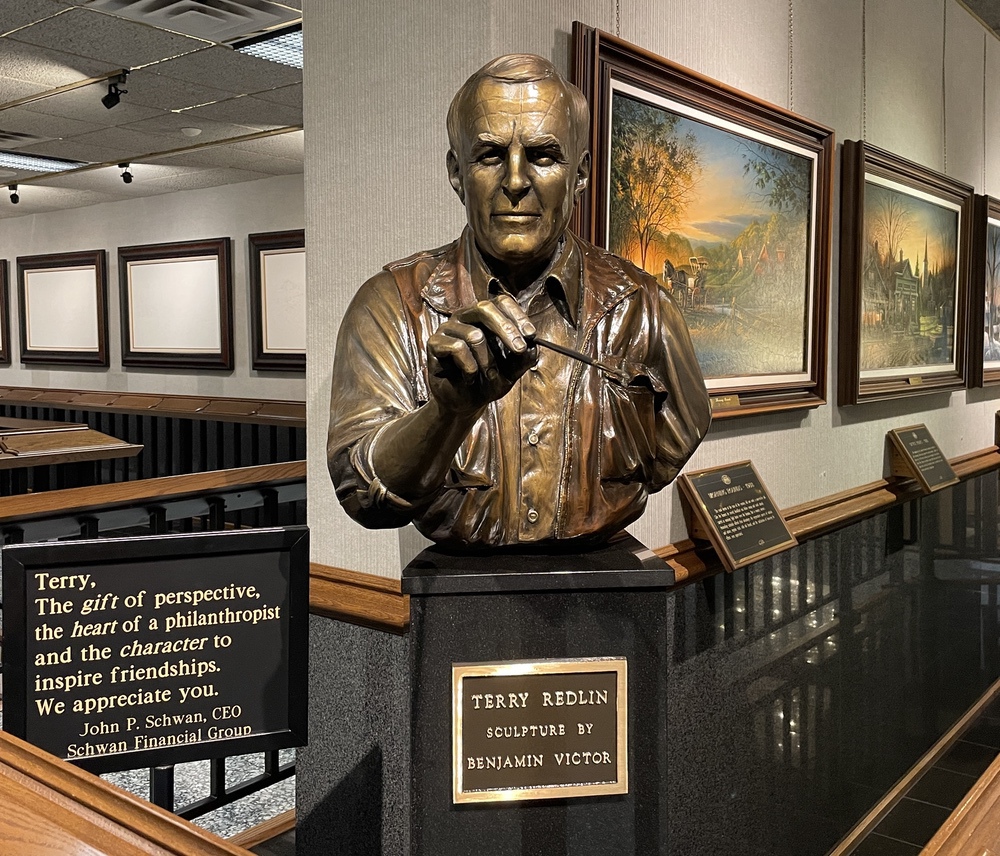
Ranum said when the Center was under construction, he told her, “We don’t even know if anyone will come. I just hope it doesn’t look boastful … I’m not doing it for my own gain, but if my name can help my hometown, I want to give back.” She worked directly for him for 10 years, until 2007, when he was diagnosed with Alzheimer’s. He passed away in 2016.
As Ranum walked with me through the various galleries, she shared endearing anecdotes. It is clear that she and Redlin shared a warm bond of friendship, as well as an understanding of the mission and scope of his work.
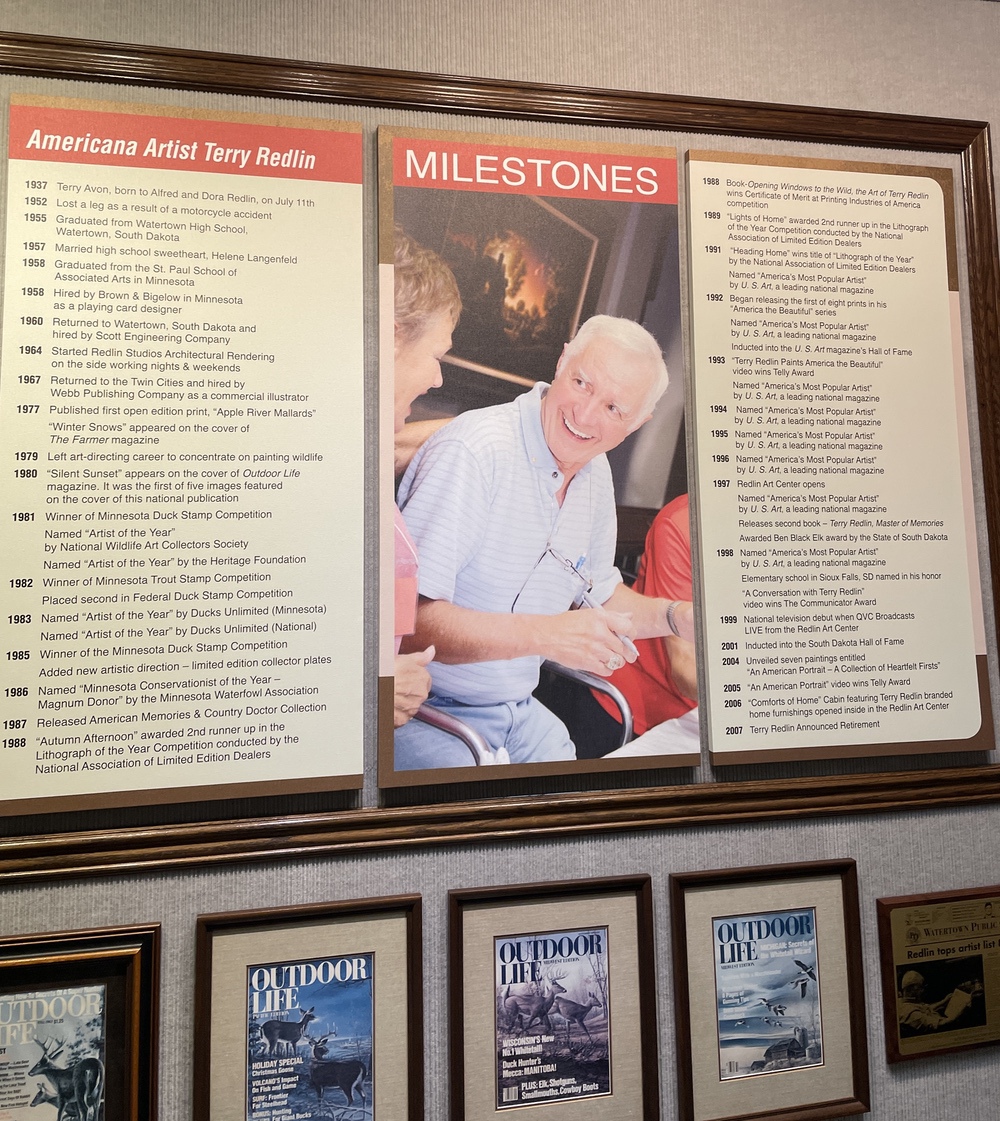
The Redlin Art Center offers free admission, a gift from Terry Redlin and his family. It is open Monday through Friday from 9 a.m. to 5 p.m. and Saturday from 10 a.m. to 4 p.m. It is closed on Sundays and holidays. Please see the website for more information.


