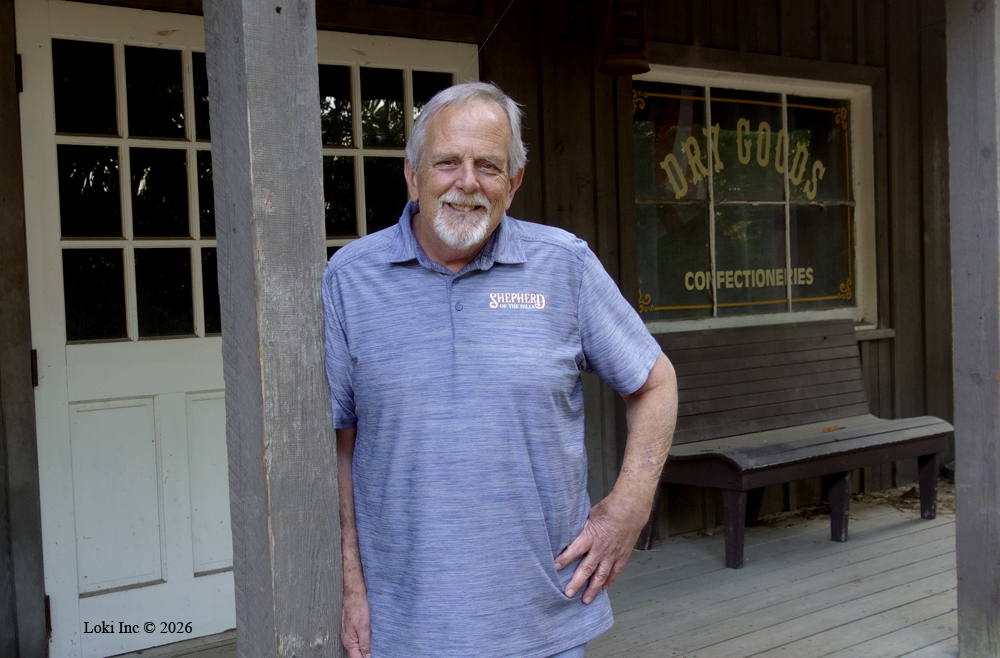
We recently crossed another Ozarkian thing to do off our bucket list, and that was to attend a live performance of “The Shepherd of the Hills,” in Branson. I re-read the book before we went, and familiarized myself with the characters who richly portray the foibles and qualities found in Ozarkers. Instead of writing a review of the performance, I wanted to meet the cast and go behind-the-scenes before the show, to better understand the foundation that brings this legendary story to life onstage. Thanks to Curtis Copeland, who is in the show and who also co-hosts the popular podcast “Ozarkian Folk Chronicles,” (with Hayden Head) we got a backstage pass into the green room well before the show began. I met several actors, director and the costumer, and here’s what they had to say about life onstage in Branson’s oldest and most historic drama. Director Jay McFerron promised me an interview later, when he wasn’t wrangling schedules, actors and other pertinent pieces of a successful drama.
Behind the Scenes at The Shepherd of the Hills
Curtis Copeland
Curtis Copeland works as a livestock wrangler and acts as a Bald Knobber in the show. Growing up near Branson, thanks to his folks he had seen the show as a young person. He said, “Also, being somewhat of a local, the Outdoor Drama, as well as many of the actors, were somewhat legendary. And of course, the Ozarks itself, and the way its cultural and natural features can become a part of you, is leveraged by the Shepherd of the Hills Outdoor Drama (and Wright’s story as well). That’s a long, drawn-out way, of saying that I was a dedicated fan since childhood.” Later in life, he had a co-worker that was an actor in the show, and she suggested that Curtis come out for a visit and to meet the current director at that time, Keith Thurman. Curtis recalled, I’d known of Keith Thurman for years, as the iconic ‘Young Matt’ actor of the 1970’s and 1980’s. Keith was very kind, and gracious and gave me a part as a Bald Knobber. I began working out there a couple nights a week.”
Today, Curtis can be found onstage, and in the stables, at least one night a week, maybe two. He explained why he has stayed with the show: “Working at Shepherd, for me, is something different than employment. I’m only out there one evening a week, unless they need help, or to cover for someone who is not available. One night a week is about all the ‘bandwidth’ I have due to all of the commitments I have … Being at Shepherd is like an escape from the modern world. It’s an escape to that romanticized Ozarks of the past. It’s very much a roleplay, but it’s a completely immersive experience. It takes over all your senses, sights, sounds, etc. Plus, you are very much among family, and folks that feel the same about Shepherd that you do. Those folks also take it very seriously. It’s a tradition that is taken very seriously.”
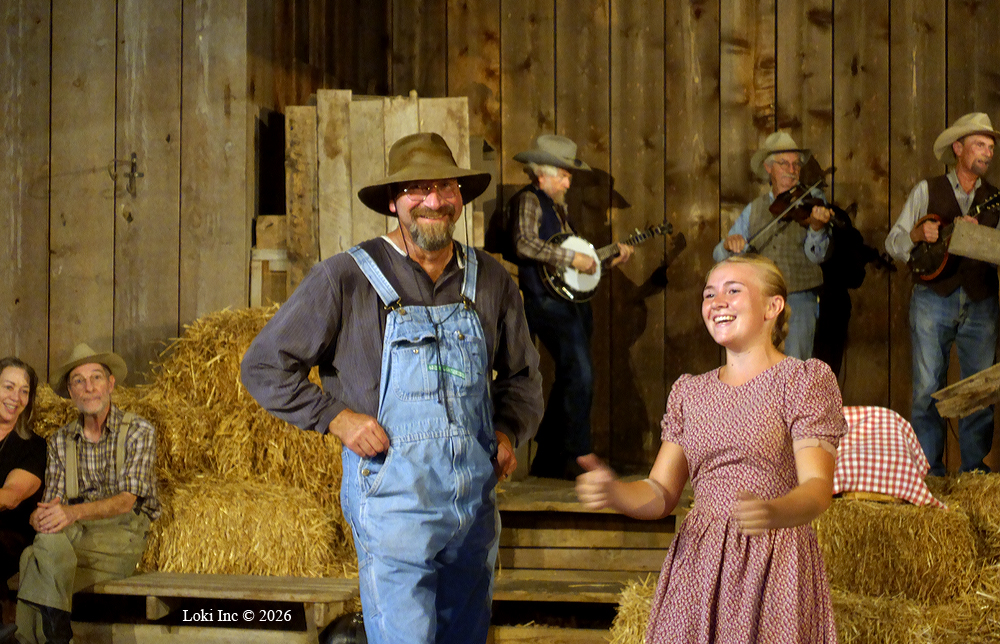
I asked Curtis why this show is relevant in today’s world of glitz and glamour, and certainly compared with the lineup of shows found on the Branson strip. He said, “Shepherd of the Hills Outdoor Drama is the one attraction in Branson that has always remained constant is preserving and presenting Ozarks history and culture to its visitors. In the original Shepherd of the Hills story, (nearly 120 years old now), the Ozarks and its hills and hollers was a main character in the story. That story drew thousands of visitors to the region nearly 120 years ago, and has continued to do so until now. There’s something very special about this rural region, ‘exceptional,’ you might say. I can’t put my finger on it; many probably can’t but it’s obviously there. I think (and am thankful), that the powers that be at Shepherd realize this, and have not changed this formula, when so many other attractions (most that aren’t even around anymore) have. Shepherd of the Hills Outdoor Drama is the one place in Branson that visitors can experience an authentic, and very real tradition.”
Live … with Livestock
Curtis, who grew up riding horses, works with the 40-some animals, including horses and mules, for the show. I asked him if they have personalities. He answered, “Absolutely, every one of the horses and mules have their own personalities. It’s important to understand this and know the animals. We have to know how they behave in a variety of situations because the outdoor drama has a lot of moving parts, lots of action, loud noises, people, etc. It’s all about safety. Keeping those of us that work as wranglers safe, as well as be able to inform and keep the cast members safe, and of course, keep our visitors safe. We also want to keep the animals safe as well. They work hard and deserve good care. The horses and mules know the show as well as the cast in a lot of ways. They anticipate cues, and know the show, that’s for sure.”
To that end, not all actors know how to ride, so Curtis explained the process of teaching them to handle livestock while onstage: “At the first of each season, any new actors not familiar with horses or riding, go through what we can a ‘cowboy school.’ We teach them how to saddle the horse and check the tack, and we spend time riding with them (on our own horse, of course) on a trail ride of sorts. We continue to do these rides until the actors are comfortable in the saddle.”
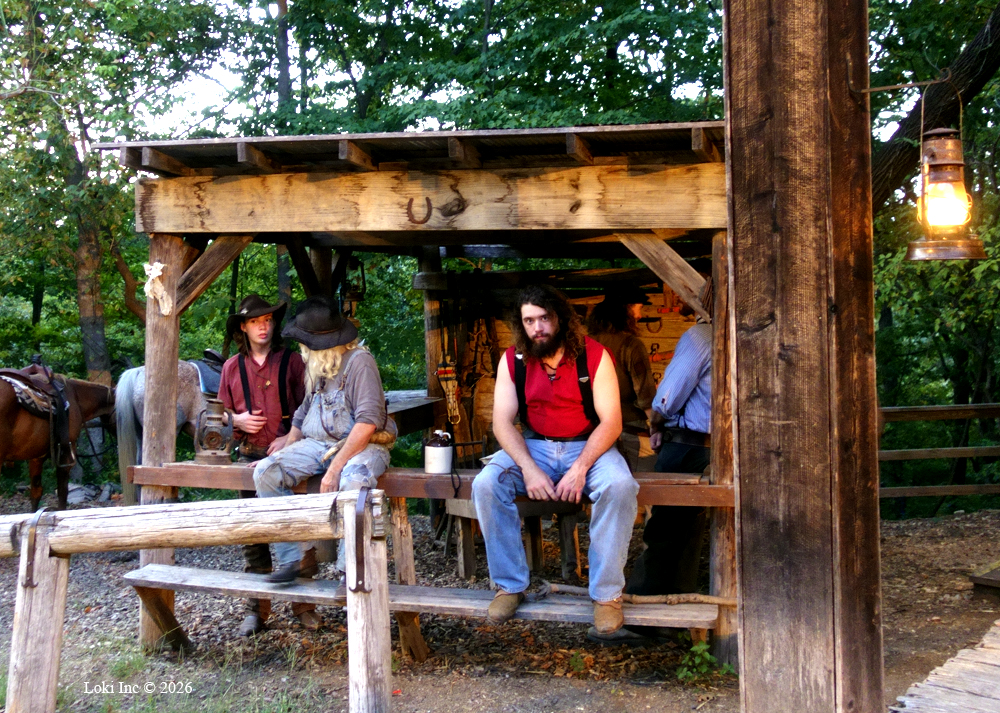
Curtis repeated some timeless lessons from the Shepherd of the Hills Outdoor Drama that he holds dear. He said, “I’ve learned how important tradition is to all of us as human beings. For the cast and crew, many of them Ozarkers and locals themselves, the tradition of the Shepherd of the Hills Outdoor Drama is very important, very much a part of their being. The importance of the story and the place is obvious to them. Plus, for many of them, it’s a family tradition, where two, three, or more generations of a family have been part of the production. And for visitors, the tradition of Shepherd of the Hills is important in a whole other way. Folks bring their families back year after year, not just because they enjoy the show, but their parents and grandparents brought them here decades before. It’s a family tradition, and vault of wonderful memories they can experience year after year. In this crazy, fast-moving world where things change by the minute, I think people really find a place of comfort in those things that stay the same.”
Thomas Reemes
“I honestly don’t know what my official title is, but I’m the costumer at Shepherd of the Hills outdoor theater, and that branches off into more than one thing; I’m a costumer, a shoe cobbler and I build props for the show. I build specialized equipment that you can’t go to Walmart and buy – torches would be an example. They have to be able to take a hit by being thrown off a horse and not hurt anyone. They have to be tough enough to hit the cabin door repeatedly as part of the show. You have to have something that will hold up while on fire and also, burn potentially, seven days a week, for 180 days in a row with no malfunctions.”
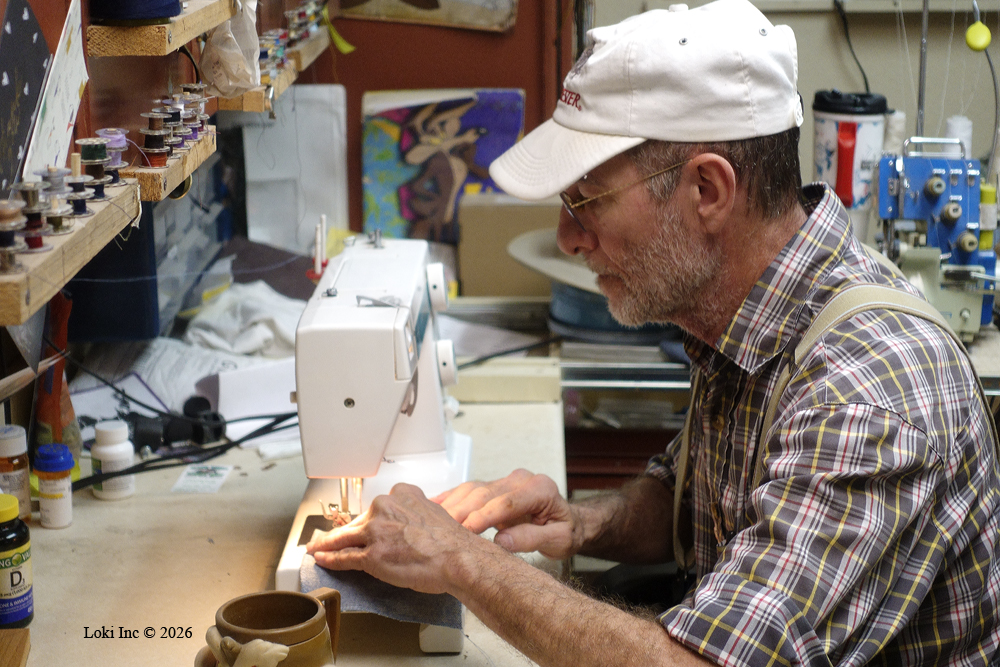
Thomas sits in a bay area within the Shepherd of the Hills Outdoor Drama’s main office building, with two sewing machines and a serger nearby, along with an ironing board and iron, and he likens his “office” to be the heart of a communication center, a place he can catch the actors as they go from the cast meeting room to their dressing rooms. He knows the play well, because he played the character of Ollie Stewart for more than 20 years. Early in his tenure at the show, the woman who was in charge of costumes indicated to him that she needed help. “She needed help, and I asked what she needed done. … I said, ‘I know how to cobble shoes, because I learned that in the Appalachian Mountains of North Carolina from my grandpa.’ … So, I started doing the laundry (of the costumes), and then she’d say, ‘Hey, can you sew up this hole or sew on a button?’” He taught himself how to sew in the process. After he showed that he could handle the laundry and repairs, the costumer would show him tricks and tips for sewing. He said, “Any creek, squeak or water leak that came in here, I could take care of.”
It wasn’t long before the costumer left to work with the Rockettes that Thomas stepped into her shoes. He doesn’t make the costumes, but says the show has an extensive wardrobe department with thousands of items, which stay in service for a long time. When not on the job, he continues to search for overalls, boots, hats and other costume pieces: “My wife and I like to go antiquing or to flea markets as a hobby, and so I’m going through here and I see a nice boot, and if it’s at a garage sale, you might get it for 50 cents. You gotta buy that! It’s mainly garage sales, flea markets and antique stores.”
He said, “Periodically, someone will be really good at what they’re doing and ask, ‘Would you mind if I bring in a pattern and you OK’ed it, could I build a dress for me in the show?’”
Thomas says there is a lot of wear and tear on the costumes, because of the physical nature of the show. “I do repairs every day. I think I did three or four pairs of boots in the last two days.”
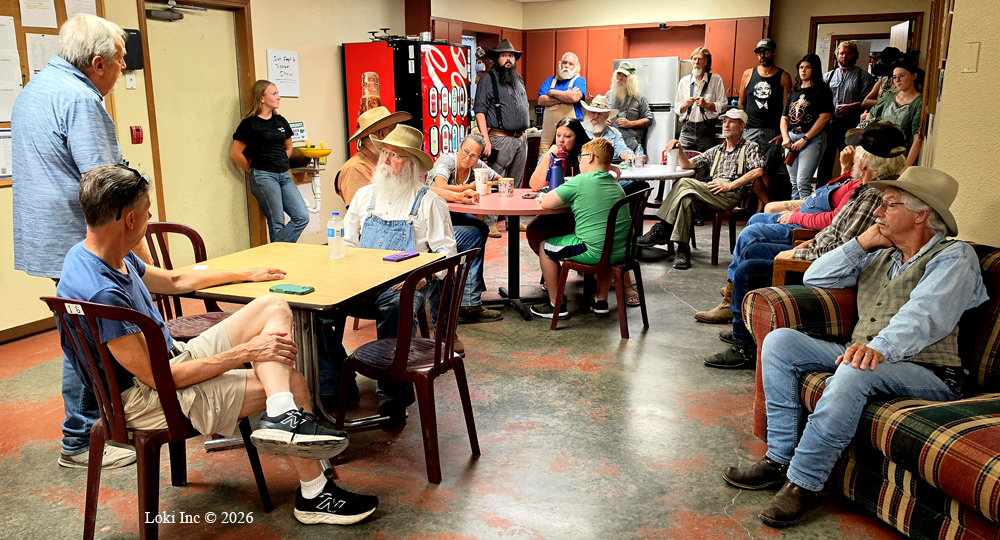
About playing Ollie Stewart, who is a weak man, he said, “Being dyslexic, it was a challenge. I focused on staying on message. I would memorize things where it was rote, where it was a train track of one word right after the other.” About the physicality of the role of Ollie Stewart – a weak man who gets bullied by the protagonist Wash Gibbs – he believes that his martial arts background helped. He said, “Me and the ground are friendly. … There were times when you weren’t able to work because you were injured … I worked across from who knows how many Wash Gibbs because of the amount of time, and with every one of them, we developed a rapport. … I was consistent when I landed after Wash Gibbs threw me up in the air. I was about 40 percent of that lift, and it makes it look easy for him.”
Thomas then took us on a tour of the wardrobe room, and showed us the process for making the safe torches and green clay jugs (that get broken every show).
Later that evening, I sat by Thomas on a bench onstage during the show’s intermission where he came out to the square dance as a cast member. The cast invites the audience down to dance or visit during intermission, as if it’s a party for everyone, which is a wonderful touch.
Angie Coffelt
Angie Coffelt comes with a pedigree of family members who have been in the drama. She said, “My dad and my granddad actually helped build the first theater here in 1960. My dad and my mom met as actors in the performance in ’67, married in ’68. My mom played in the show when she was pregnant with me as Mrs. Wheeler, which is what I’m going to do tonight.”
In fact, Angie’s mom’s picture and her walking stick are on the wall in the green room (she passed away last December). Her mom wrote the part of Mrs. Wheeler, which Angie would play later that night onstage. The director at the time, Hal Meadows, wanted to add another female character and told her mom to figure it out, so her mom wrote the lines back in 1966. Angie has also played Mandy Ford. She took a break, but returned to the show in 2012, when she was in her 40s, when her son played Little Pete. The director, Keith Thurman, saw her sitting on the office’s porch and asked her, “Sis, do you still think you could play Mandy Ford?” She said, “Yes,” and he said, “Well, go get dressed, I need one!”
Her son is no longer with the show, but her daughter, Grace, is in the show and plays Sammy Lane. Grace also wrangles livestock and is a square dancer.
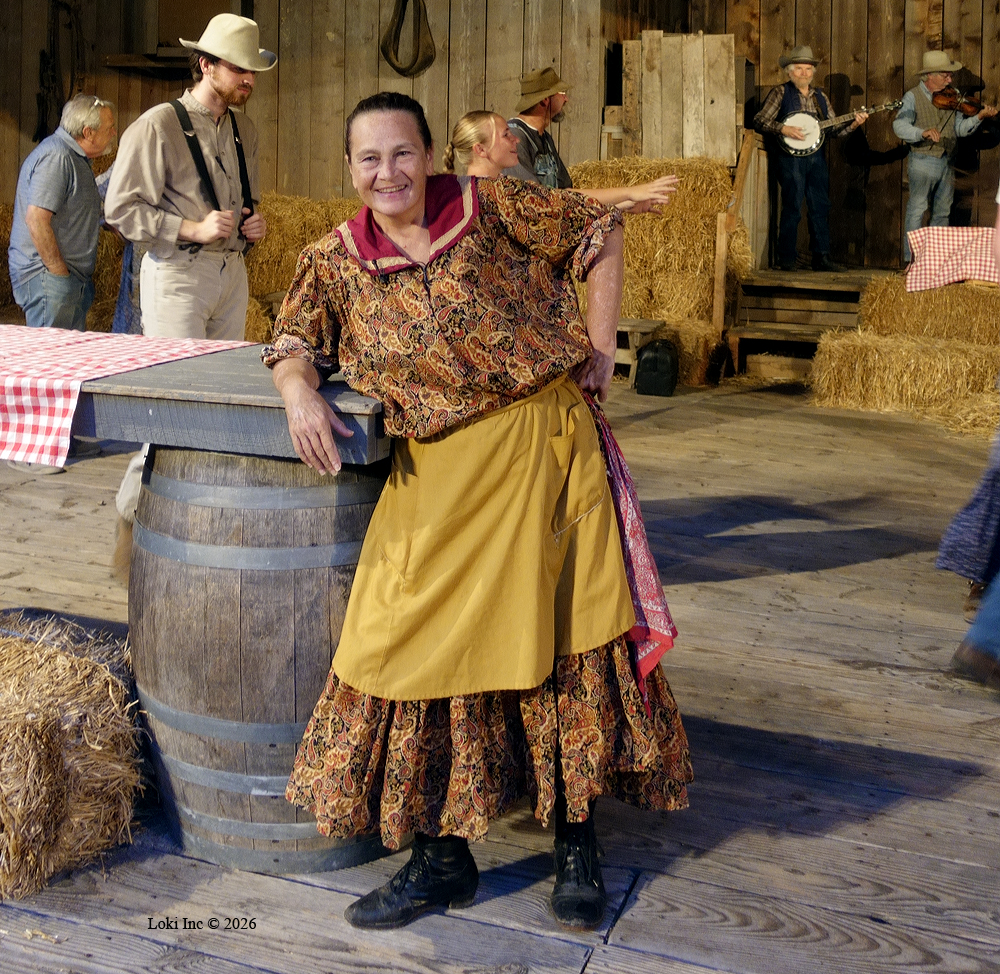
Angie has stage 4 cancer and she said, “I’m not supposed to be long for this world, but that’s up to God Almighty, and He’s been very, very good to me so far. My expiration date was supposed to be April 2025, and I’m still here, and I prayed to God two things: Let me see my daughter graduate high school, which happened in May 2025, and don’t make my mama have to bury her only child, and she (mama) passed last December.” She believes there’s a plan for her.
She added, “Everybody that works here is family. We may fight, but we make up, just like family.” She said that some people have been recommended by other cast members for the show, and some folks just show up and fit in naturally, like they were made for the cast.
Angie said she feels like the cast members are her grandparents, parents and children. At full cast, it will number more than 40, but if there aren’t a lot of tickets sold, it’ll be pared down to the minimum – probably around 30 people.
Angie believes the horses are the most interesting thing of the whole Shepherd of the Hills Outdoor Drama. She noted, “There have been a kajillion wagon accidents; there have been people that come off horses. You never know what to expect when working with live animals. Sometimes the horses spook and take off.” Her late mom had a head injury after falling off the wagon when a mule spooked.
Angie does trail rides onsite with the horses, and she knows their personalities. “They’ve actually helped me through this situation with my cancer because they’re so empathic. A horse’s electromagnetic field can extend outward from its body up to four feet; a human’s is about a foot to a foot-and-a-half. They’ve documented that therapy horses are with their kids, their heartbeats sync. The horses feel your emotions.”
Angie is a spitfire in the show, acting the part of a bossy wife to Lem Wheeler, who seems laid back (aka, lazy).
Greg Winters
Greg Winters started in the Shepherd of the Hills Outdoor Drama in 2000, and he plays Doc Coughlan or the Shepherd, aka Howard/Dad. Greg moved to the Ozarks from Grand Rapids, Michigan, where he worked as a food chemist. In 1989 he came to Ft. Smith, Arkansas, with the company (Gerber) and in 1996 the company downsized and laid him off. He thought, “What am I going to do? So, we came up to Branson to see Andy Williams, and we drove down Highway 265 and saw that there was a resort there for sale, called Cardinal Hill Cottages … we wound up buying it (1998), so I was an inn keeper for 22 years.” He said he tried out for the show in 1999 and didn’t get a part at all … but the director remembered him. When Christmas season rolled around, the director thought the white-haired and bearded Greg would make a great Santa and also, encouraged him to try out again for the Shepherd of the Hills show. Greg was successful this time. In 2000 he also tried out for a part in the local community theater’s performance of “Fiddler on the Roof” and got a main role. When he lived in Michigan, he starred in “Fiddler on the Roof” five times, and spent a lot of time on stage.
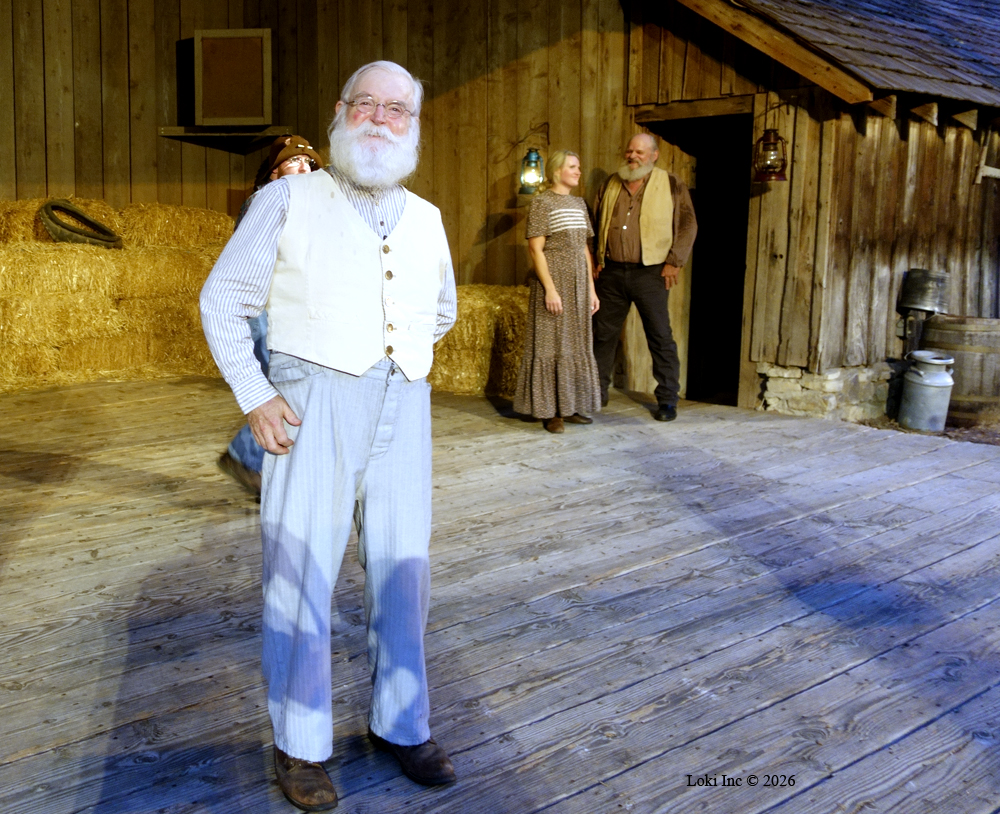
About playing the main character, Dad, he said, “It’s such a change in his character. At the beginning of the show, he could come across as a little bit cocky, but then when he finds out what his son did, it brings him down and then, at the end of the show, my favorite scene is when Dad confesses what happened.”
Gregg said he likes to play the doctor for comic relief, and relishes the line, “What would Sarah and the girls say?”
Gregg works all three shows per week, and it’s either Doc or Dad, wherever he is needed.
The Shepherd of the Hills Family
When a senior citizen continues coming to the stage, when a member of the third generation of a family becomes a lead in the Shepherd of the Hills Outdoor Drama, and when the cast welcomes newcomers warmly, it’s not hard to see the how a bond forms among the cast and crew.
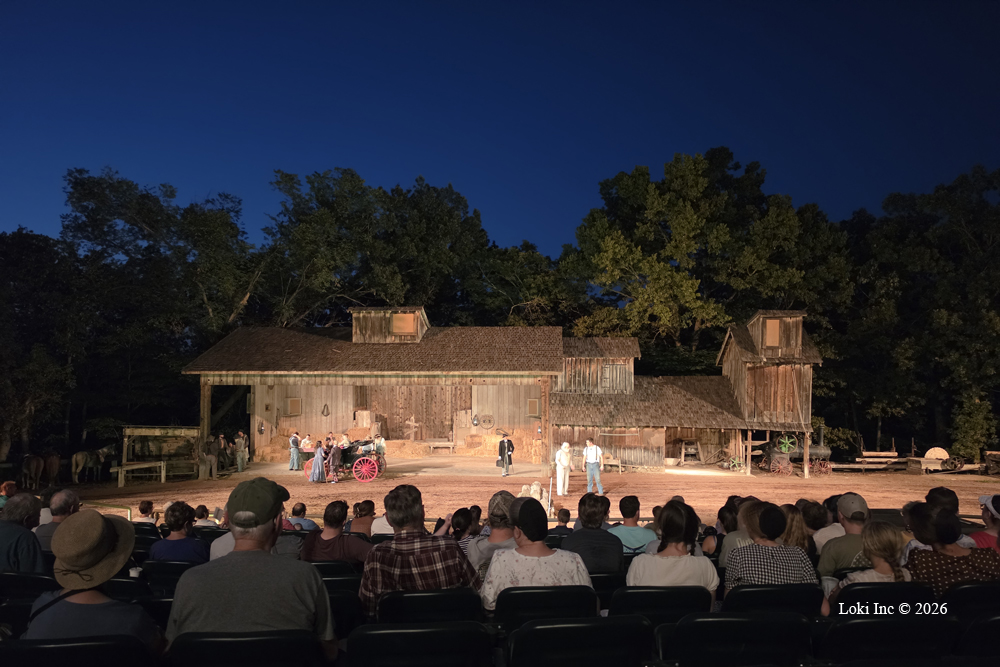
Curtis explained the bonding process further: “I think that the Shepherd of the Hills ‘family’ is just about the best example of Ozarker (or Ozarkian) behavior. As whole, (or at least what Ozarks boosters tell folks), is that Ozarkers are kind and generous people. Well, yes, that is true, but Ozarkers are also wary, and protective until they get to know folks. I think the same is true at Shepherd. Newcomers are welcomed, and the veteran cast are helpful with advice, etc. But there is also a time period where they want to be sure the new cast member takes the show and the story seriously, as well as presents a mutual generosity and friendliness, and is here to stay, then, that family bond really sets in, and it’s strong!”
The Shepherd of the Hills Outdoor Drama will continue with three shows weekly through October. It will resume performances in the Old Mill Theater (an outdoor setting) in May 2027. Learn more about the show.