When I put my list together of mills to visit in the Arkansas Ozarks, Van Winkle Mill definitely made it to the top. Online it looked interesting. Onsite, it offered a wowzah factor of almost 10 for me.
The Van Winkle mill site is set in Hobbs State Park – Conservation Area, near Rogers. Hobbs is Arkansas’ largest state park (12,170 acres) and lies along the southern shore of Beaver Lake.
History of Van Winkle Mill
As with most mills in the Ozarks, Van Winkle Mill touts a history rife with personality. According to the “Encyclopedia of Arkansas” website, Peter Van Winkle built a timber empire that aided in reconstruction of the region after the devastation from the Civil War. As a young man, he moved to Arkansas from Illinois in 1838, purchased an 80-acre farm three miles west of Fayetteville and set up a prairie plowing business, as well as building wagons and working as a blacksmith. An inventor, he devised a spring system for wagons that made riding more comfortable. He also invented a plow that could be pulled by several oxen. He and his second wife (his first wife died early in their marriage), Temperance, eventually had 12 children.
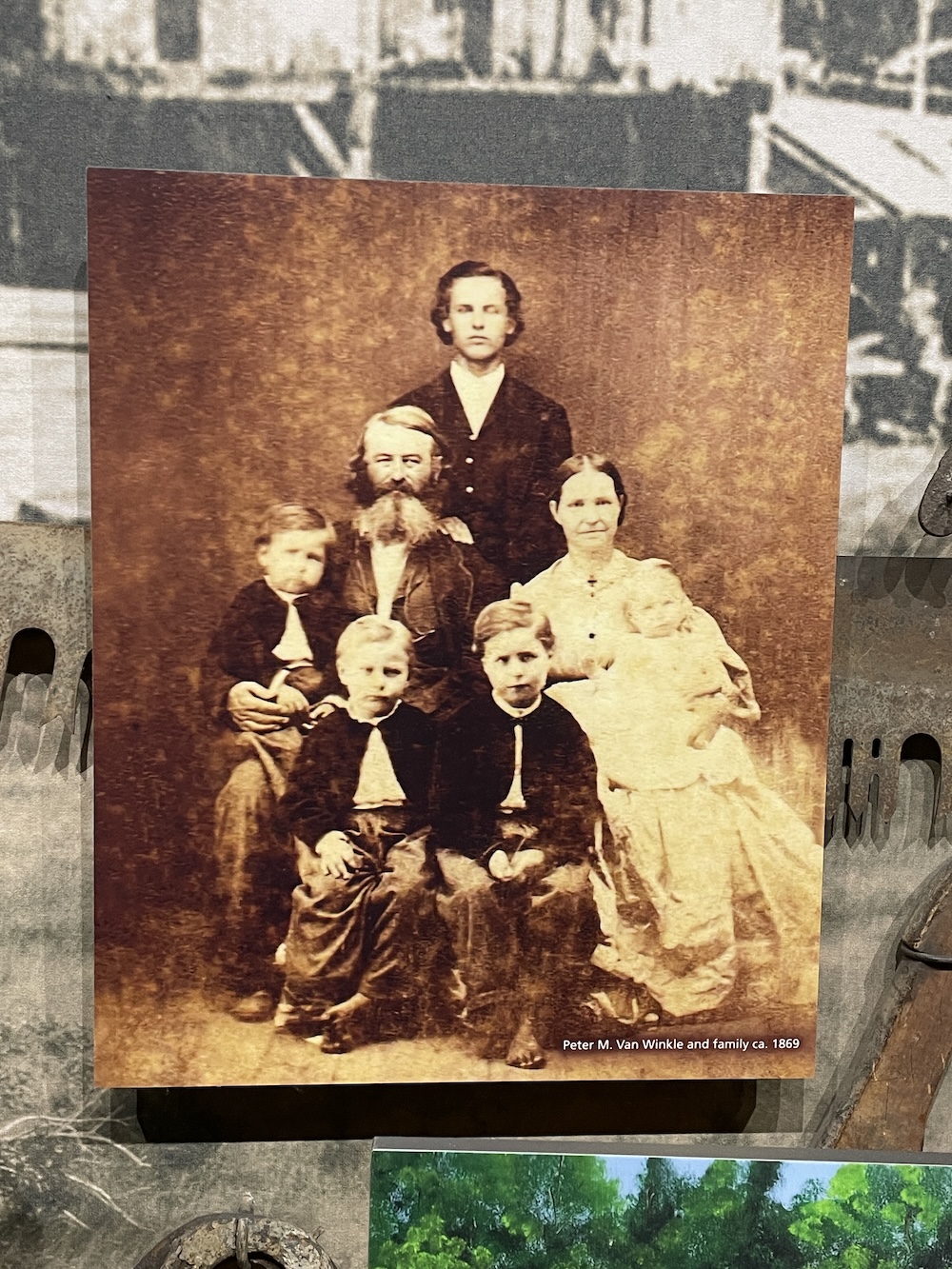
In 1852, after brief times in Illinois, then back in Arkansas, and then in Texas, he returned to Arkansas and established a sawmill set in a forest in Benton County, at the confluence of North and South Blackburn Creeks. At first, he used oxen for power, and then switched to horses. In 1858, because of a business boom, he opened a new mill in Van Winkle Hollow, and purchased a 150-horsepower steam engine to power the mill. It was the first steam-driven sawmill in Northwest Arkansas. Using the steam allowed him to employ the oxen to haul in lumber, instead of run the mill.
The family lived in a large home nearby, and owned 18 slaves. In 1861, Van Winkle procured a contract with the Confederate government to construct 39 buildings and five stables at Cross Hollows. The Union began to overtake the area, forcing Van Winkle and his family and slaves to flee to Texas. Note: Temperance was pregnant with their ninth child, who would be named Robert E. Lee, during the escape.
After retreating from the battle at Pea Ridge, the Confederates ground corn at the mill, and wounded men stayed in the mill and house. When the Van Winkles returned after the war, in 1866, everything had been burned to the ground.
Not a man to give up, he rebuilt. He ordered three boilers from the East Coast for a steam engine that produced 200-horsepower for the mill. He added a gristmill to the set-up, and realizing the need for more construction in the area, he also built a sash-and-window facility. As a result, he greatly aided the reconstruction efforts of Arkansas with notable contributions of wood and other building materials. You may see the results in Old Main building on the University of Arkansas. It is said that most of the Victorian homes you see in Eureka Springs, Fayetteville and Bentonville were constructed from Van Winkle’s mill’s lumber. By 1870, he owned the largest sawmill business in the state.
In order to haul lumber – either to the sawmill from the timber areas or to cities and towns that required it – roads had to be built. According to Arkansas Gravestones online, Van Winkle created “an extensive road network stretching across northern Arkansas and into Missouri to expedite the transportation of timber.” The transportation improvements undoubtedly attracted more businesses and people to northwest Arkansas.
By 1871, he began construction of a new home with 11 rooms. Supposedly, again according to the Arkansas Gravestones’ website, Van Winkle told his former slaves that they were free to go, but many stayed and worked for him.
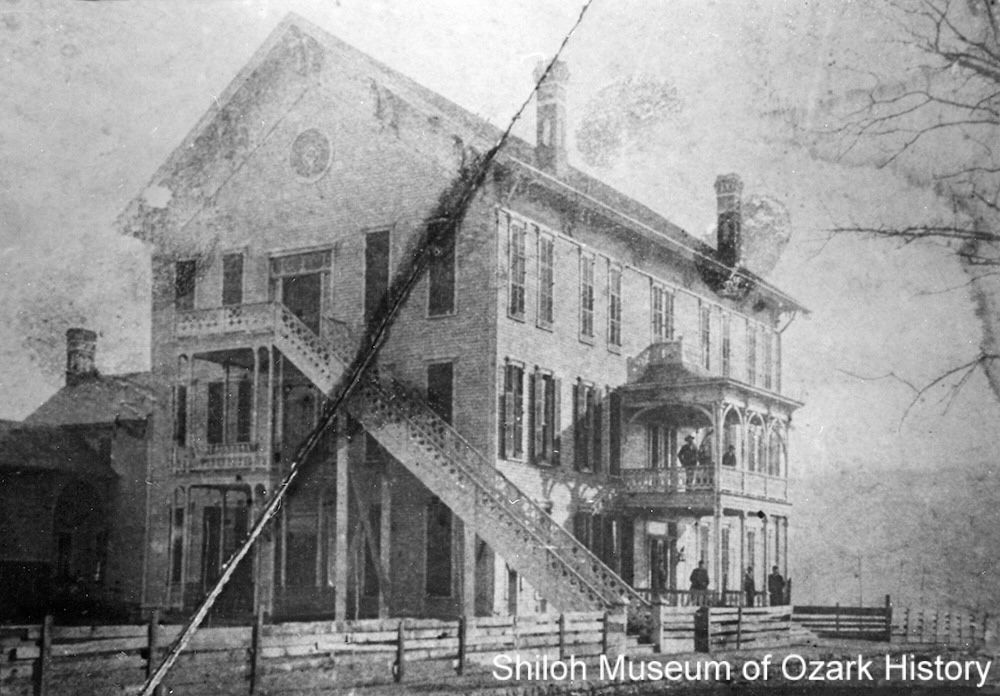
Van Winkle also built lumberyards in Rogers and Eureka Springs, and constructed a portable mill in Madison County. Over in Fayetteville, on the square, in 1880 he erected the three-story Van Winkle Hotel – purportedly the largest frame structure in the entire state of Arkansas at that time. The third floor was one of Fayetteville’s first opera houses. The hotel closed in 1905 and was demolished afterward.
After suffering a stroke in February 1882, Peter Van Winkle died and was interred in the Evergreen Cemetery in Fayetteville. One of his daughters had married James A.C. Blackburn, whose father owned the War Eagle Mill. After Peter died, Blackburn purchased the home and mill site at Van Winkle Hollow. The mill closed in 1890. Throughout the years, heirs struggled to hold on to the business and land, losing parts of it in foreclosures. As with so many mills, machinery – including the 10-ton, 20-foot diameter fly wheel – found its way to the war effort in the 1940s.
Roscoe C. Hobbs, who owned the Hobbs-Western Tie Company, bought part of the Van Winkle estate in 1928. By 1940, he had purchased the rest of the Van Winkle estate. Upon his death in 1965, his estate offered the state of Arkansas first right of refusal to acquire the land. The state could not afford it at that point, but finally came up with the funding in 1979.
Harvey and Bernice Jones bought the old house in 1968, dismantled it and moved some of its materials to Har-Ber Village in Grove, Oklahoma. The village is a reproduction of early America, and contains a chapel and other buildings made of materials from the Van Winkles’ home.
The Van Winkle Mill Site Today
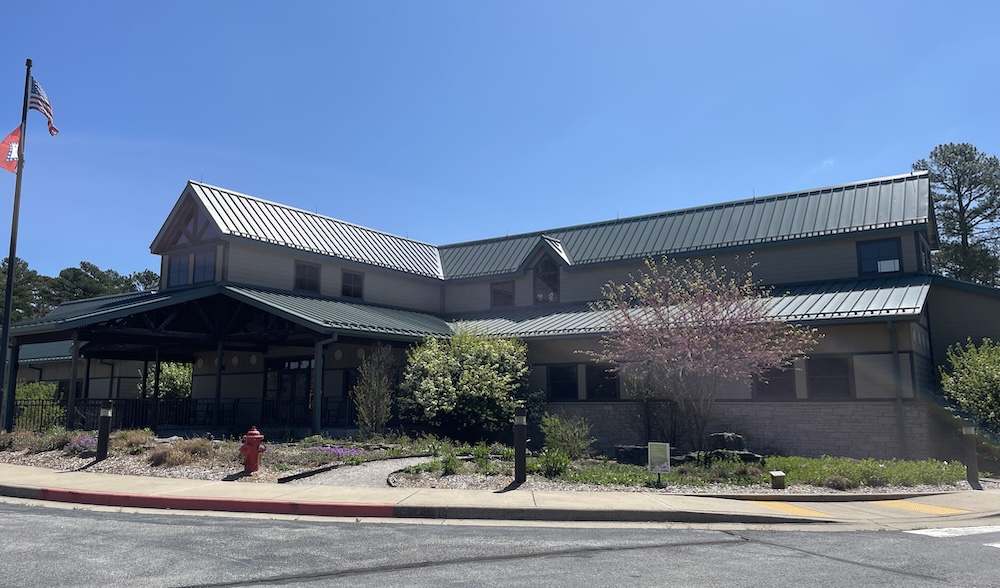
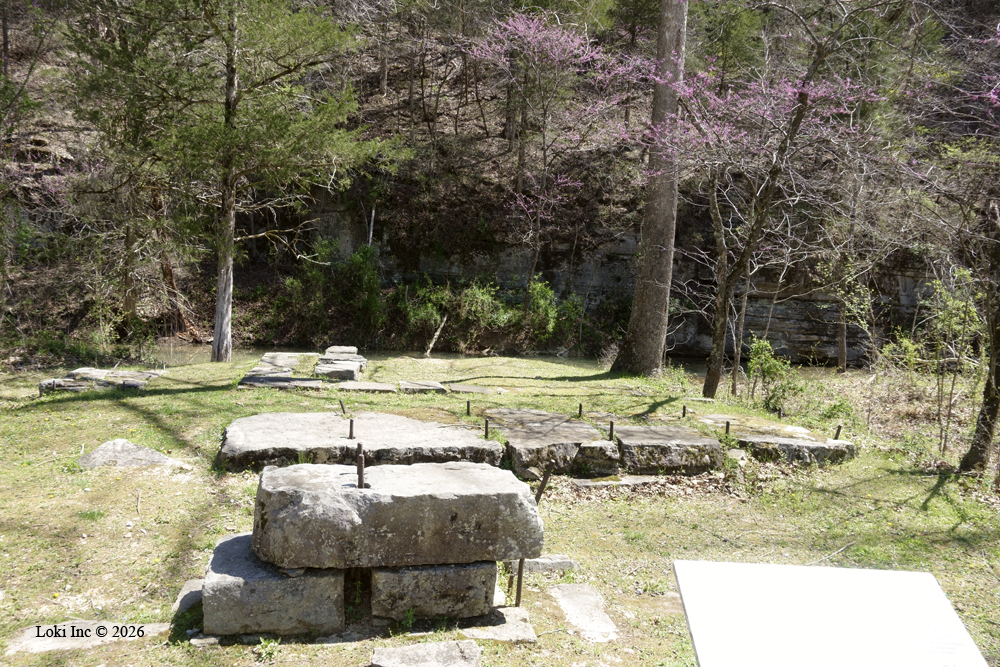
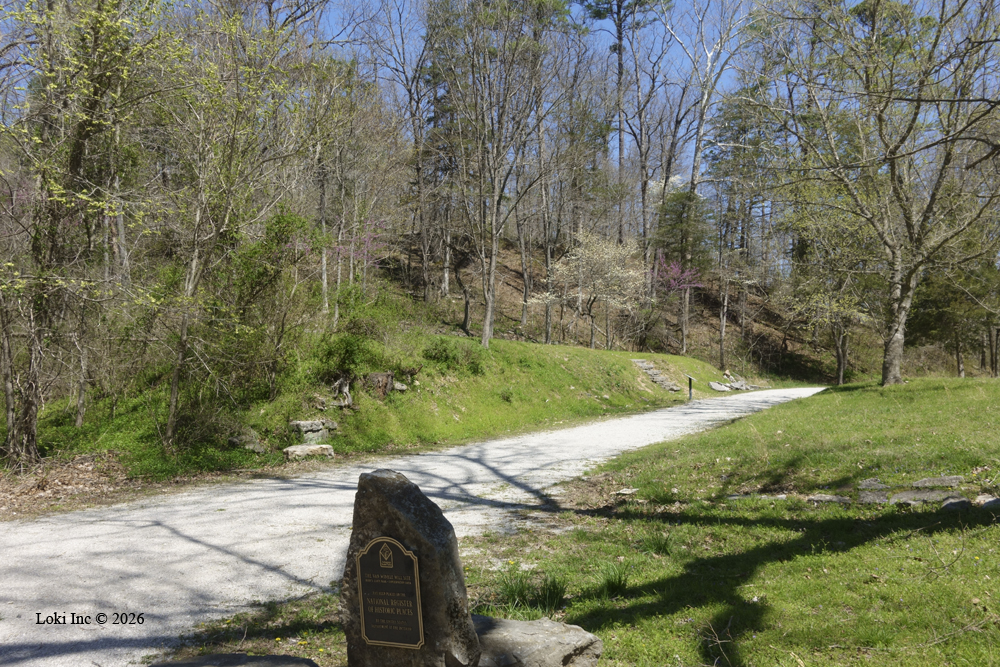
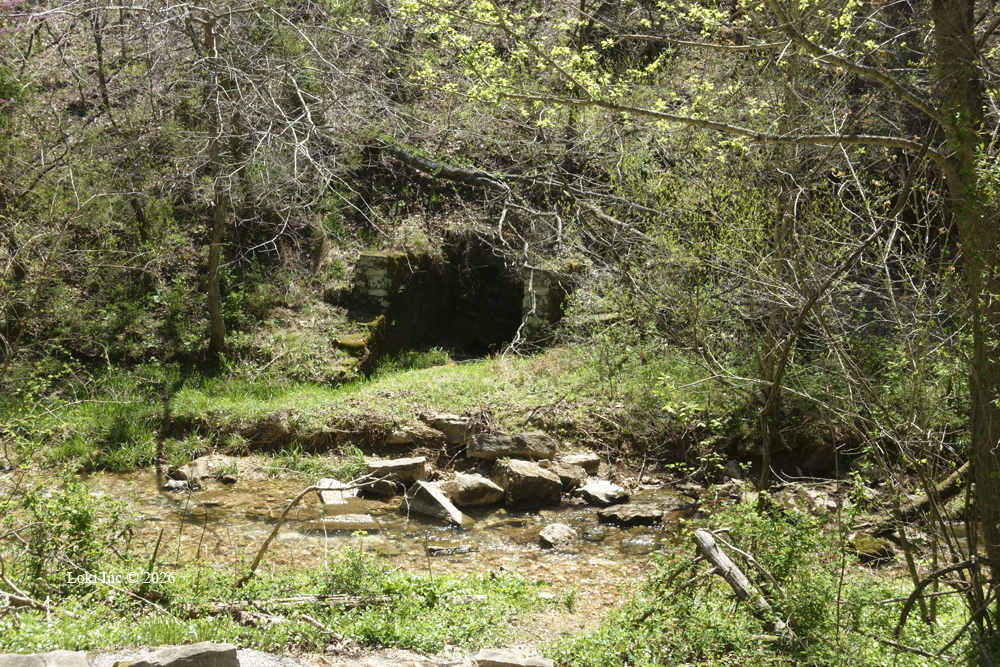
Start your visit at the Hobbs State Park visitors center, and you’ll get an idea of the wildlife and geology of the area, as well as the history. Then, take a hike down the hill to the lovely setting of the Van Winkle mill and home. Although the actual house and mill buildings are gone, you can imagine what life was once like here. It’s an idyllic setting, made even more so in the spring, with the blossoming of plum, dogwood and redbud trees.
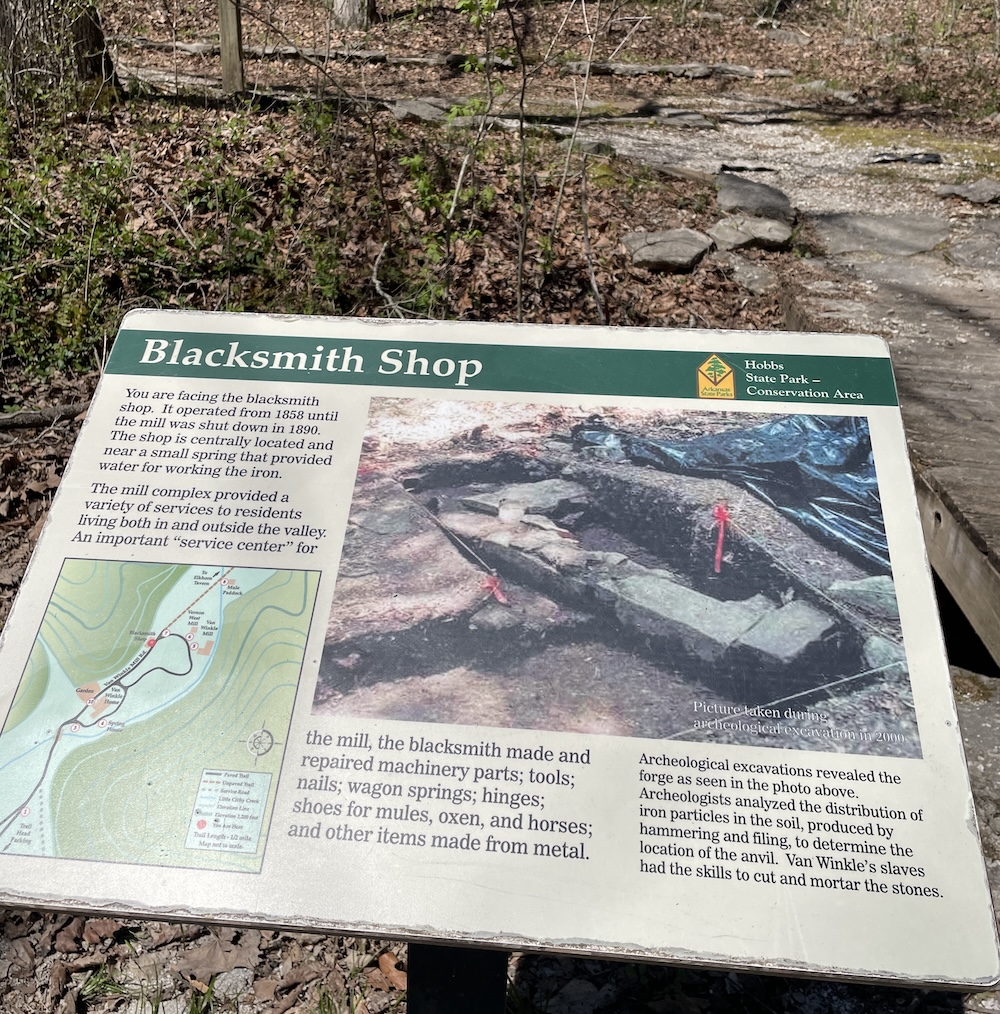
Helpful signs around the site educate visitors as to what went where. For example, the site held a blacksmith shop from 1858 to 1890, centrally located and near a small spring. Not only did a blacksmith need to constantly be making and repairing tools and items (including oxen shoes) for the businesses here, but also, people in the local community would benefit and could avail themselves of the services.
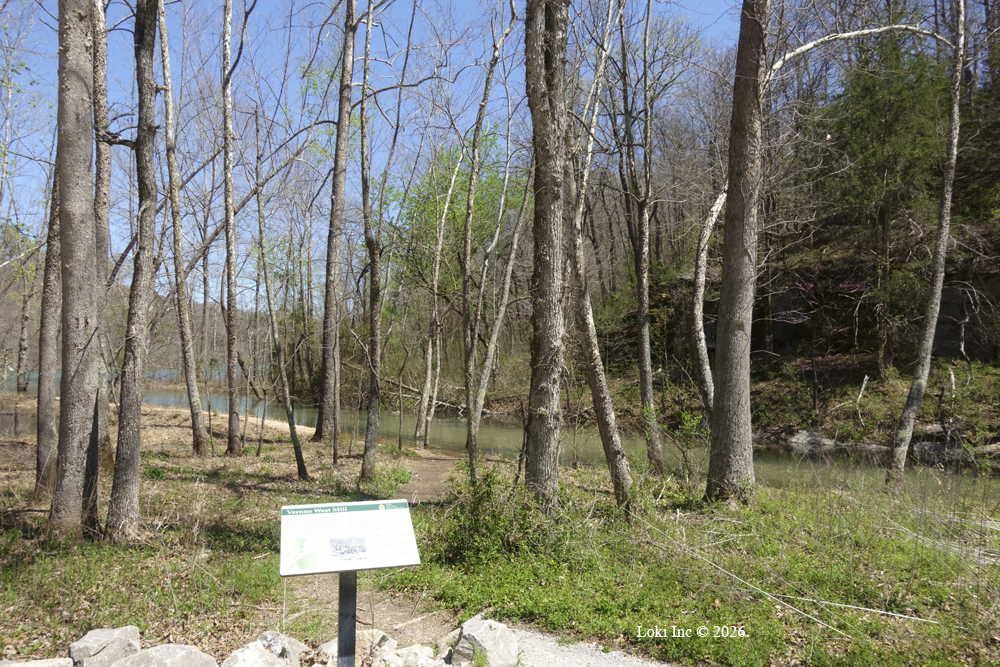
Also, onsite is the Vernon West Mill site. West worked for Hobbs as a timber buyer, traveling around to 20 states buying timber for railroad ties. West and his wife lived in the old Van Winkle house in 1944. He then set up a portable, gas-driven sawmill, providing lumber for area houses, barns and poultry buildings in three counties. His business represents the last of that type on this setting.
What to Do in the Area
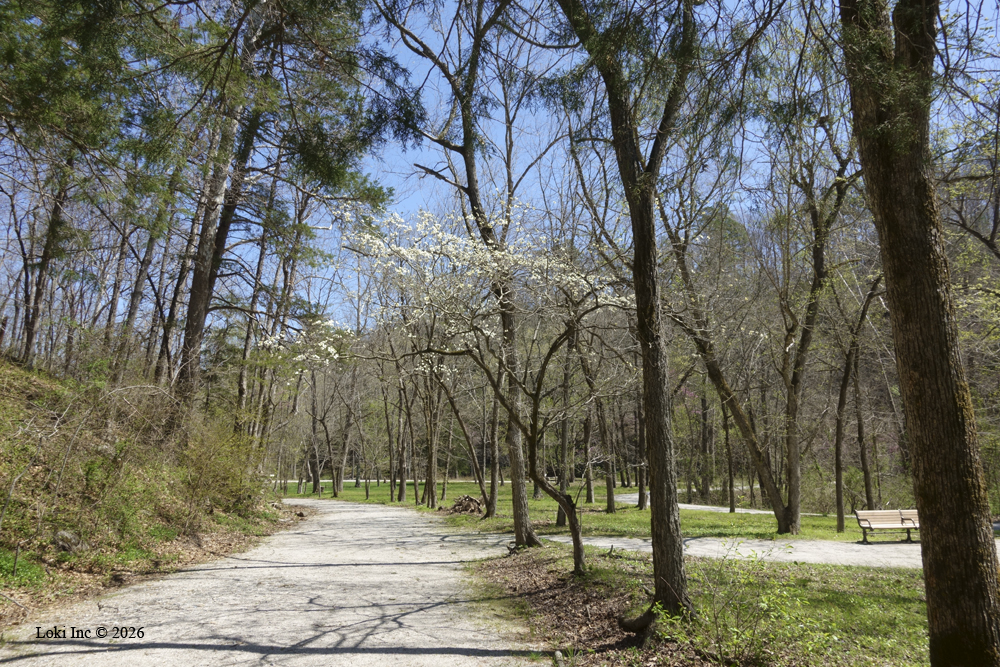
Hobbs State Park and Conservation Area boasts a beautiful visitors center, with its 17,000-square feet of Ozark geology, wildlife and history. The center also hosts interpretive events centering on wildlife. It offers an outdoor shooting range onsite. You may camp in Hobbs State Park. All campsites are remote/primitive and accessed by bike or hike (3.5 miles). There are a dozen trails to traverse by foot or bike or on horseback. The half-mile Sinking Stream Trail shares a parking lot with the Van Winkle Trail on Highway 12. You may download a conservation area trail map here. This is the only Arkansas state park that allows hunting. Anglers will appreciated fishing, and 20 miles of shoreline to do so, at Beaver Lake. Catches include bass, crappie, catfish and striped bass.
Note: If you’d like to read more about Peter Van Winkle and see a photo of the mill, please check out this website, “OzarksCivilWar.”